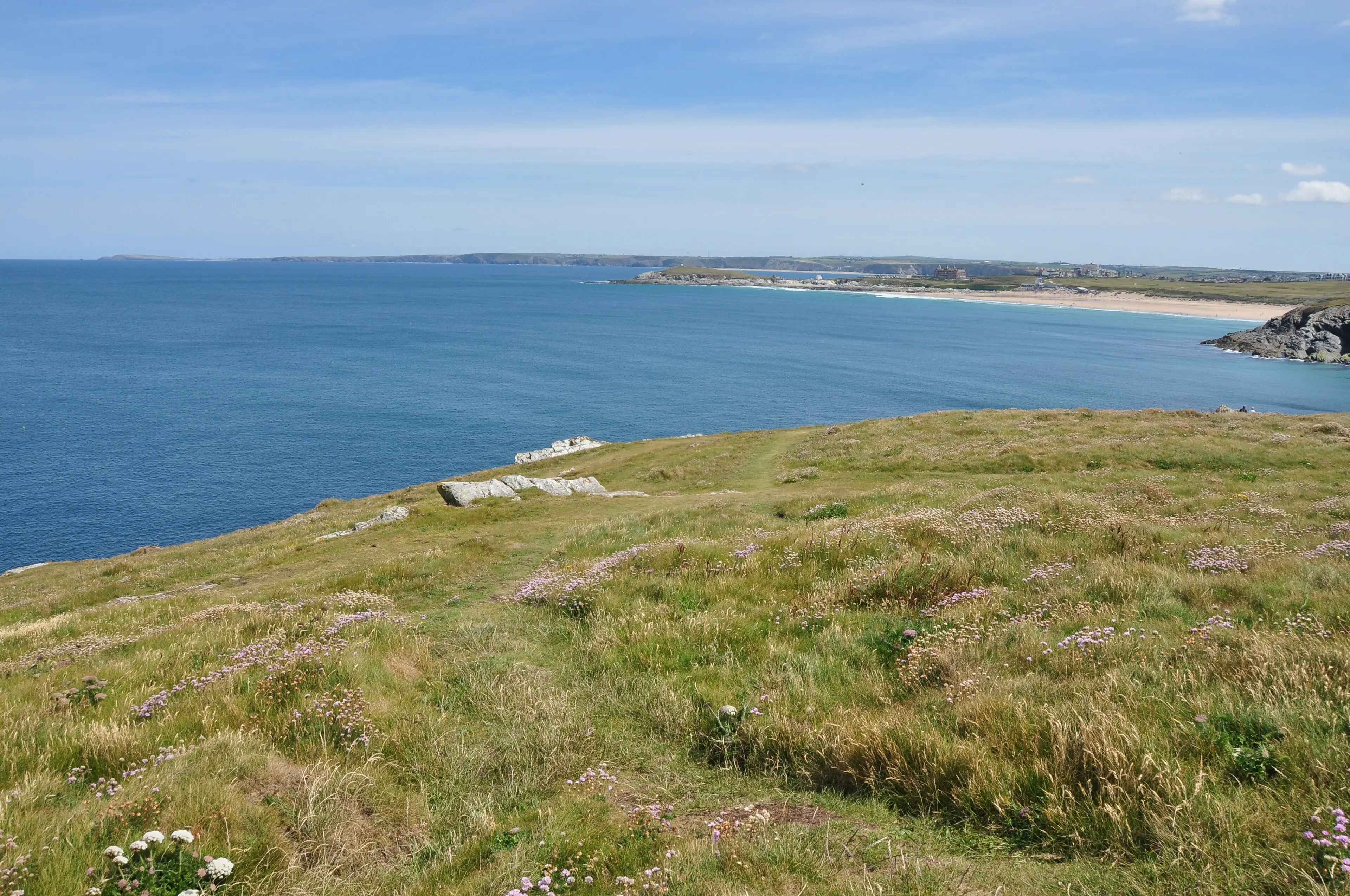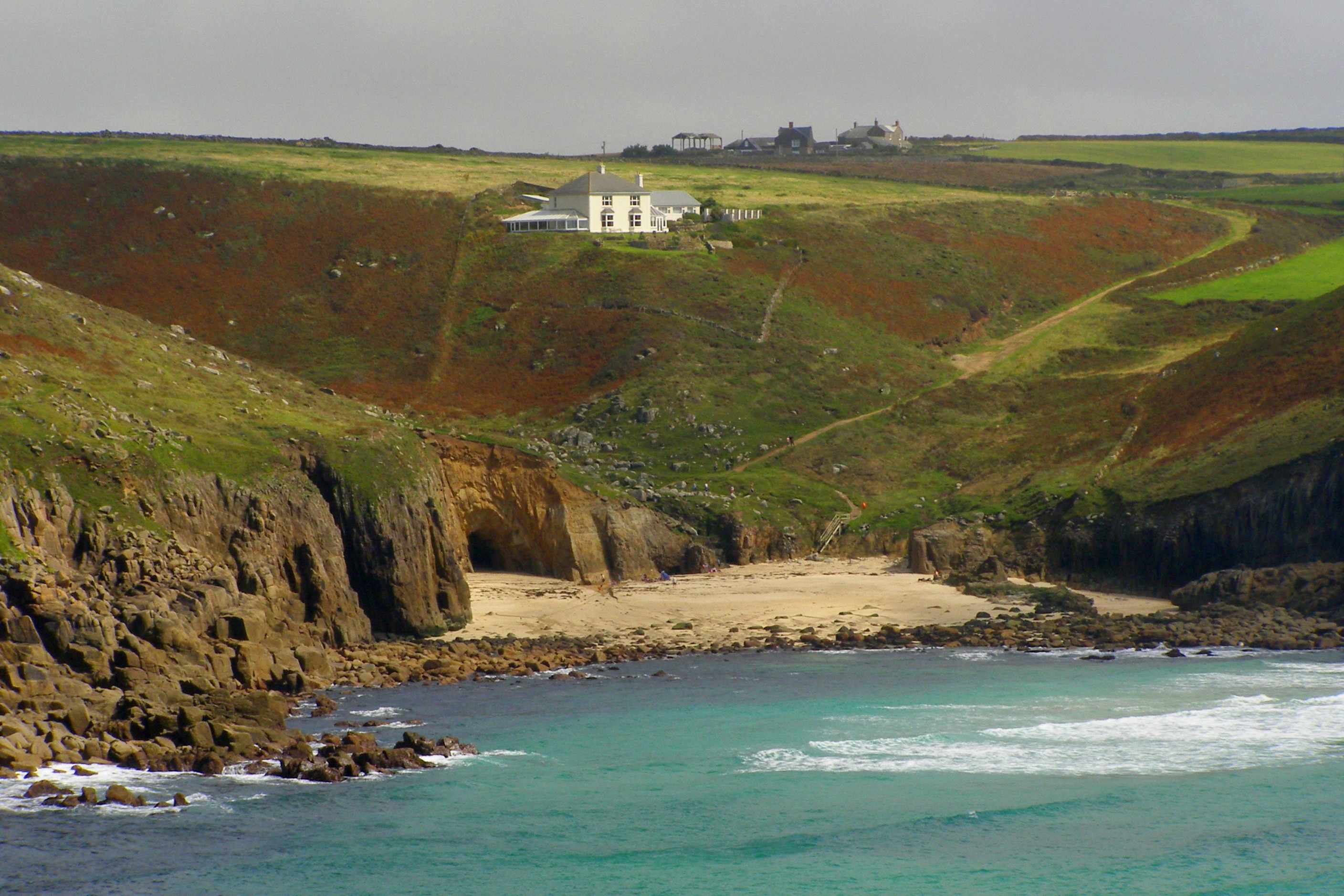
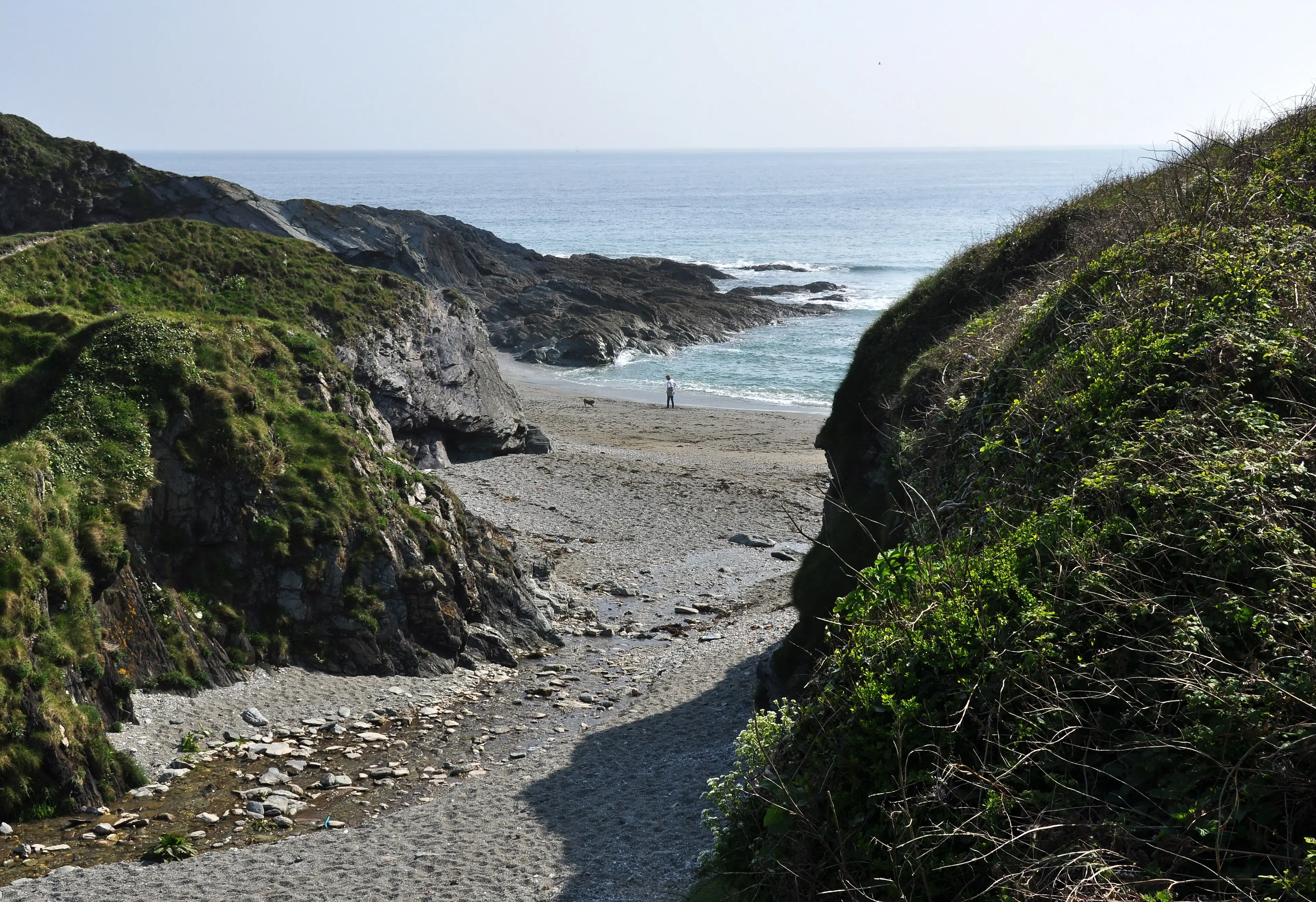
A quiet Cornish cove — turquoise water, empty sand, and cliffs with nobody else in sight.

Cornwall · Off the beaten path

The Cornwall the guidebooks skip.

Secret beaches, forgotten villages, and the places that feel like they belong only to you.

Photograph — JimChampion / CC BY-SA 3.0

Beyond the postcards

Cornwall's most famous places are famous for a reason — Kynance Cove, St Ives, Padstow, the Eden Project — but fame comes with queues, car park charges, and the feeling that you're visiting a theme park rather than a place. The alternative is to walk fifteen minutes further, park at the smaller car park, or simply drive past the signposted attraction and keep going until the road narrows and the hedgerows close in. What you find is usually better — not grander, but quieter and more yours.

There is a particular quality to arriving at a beach or a village that nobody seems to know about. You park in a field, walk through a farm gate, follow a path through bluebells or bracken, and then the coast appears — a cove with clean sand, clear water, and nobody else there. It happens less often than it used to (Instagram has found most of Cornwall's secrets) but it still happens, especially outside school holidays and especially on the south coast, which is less dramatic than the north and therefore less photographed.

What follows is a list of eight places that are genuinely quieter than their famous neighbours. Some are beaches, some are villages, some are walks. None of them are secret — they appear on the OS map and locals know them well — but they are the places that most visitors drive past on their way to somewhere with a bigger car park and a gift shop. That's their appeal.

Lansallos

Lansallos beach on the south Cornwall coast — a secluded cove reached by a footpath through woodland.
Nilfanion / CC BY-SA 3.0

A cove on the south coast between Polperro and Polruan that most visitors never find because there's no road to it. You park at a small National Trust car park in the hamlet of Lansallos (pronounced Lan-SAL-us), walk through the churchyard of the medieval St Ildierna's Church, and follow a footpath through woodland for fifteen minutes until the coast appears. The beach — properly called East Coombe — is shingle and rock at high tide, sand at low, with rock pools at either end and water clear enough to snorkel in. There are no facilities: no toilet, no cafe, no lifeguard, no phone signal. That's the point. Lansallos is what a Cornish beach was before the car parks and the ice cream vans. Bring everything you need, leave nothing behind, and swim at your own risk. On a weekday in June you will often have the entire cove to yourself.

The details

Near Polperro · NT car park · 15-minute walk · No facilities · Dogs allowed · Tide-dependent for sand · Swimming at own risk
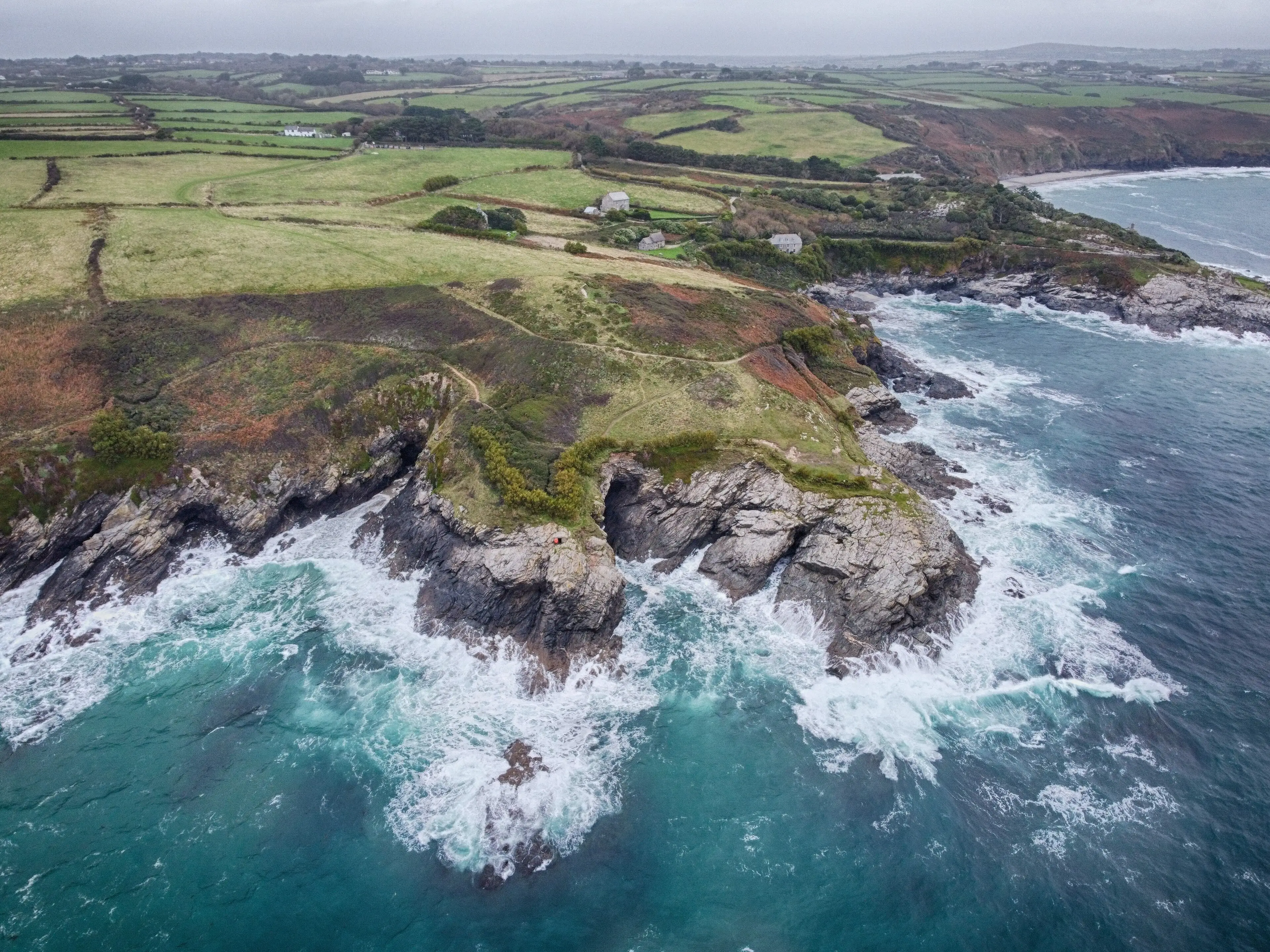
Prussia Cove

Prussia Cove — a tiny granite cove on the south Cornwall coast, historically used by smugglers.
Kernow Skies / CC BY-SA 3.0

A cluster of tiny coves on the south coast between Marazion and Porthleven, named after the eighteenth-century smuggler John Carter, who called himself the King of Prussia and operated from these granite inlets for decades. The approach is along a footpath from the car park at the top of the hill — five minutes' walk, manageable for children but not for pushchairs. The coves themselves are tiny — granite rocks, pools, and narrow strips of sand at low tide — and the swimming is off the rocks into deep, clear water. The setting is extraordinary: St Michael's Mount is visible across the bay, and the light on the granite in late afternoon is the warm pink that appears on every Cornwall calendar. Prussia Cove is well known to locals but barely visited by tourists because it doesn't appear on any of the "best beaches" lists — the beaches are too small and too rocky for most people's definition. Their loss.

The details

Between Marazion and Porthleven · Small car park · 5-minute walk · No facilities · Rocky swimming · Best at low tide · St Michael's Mount views

Cadgwith

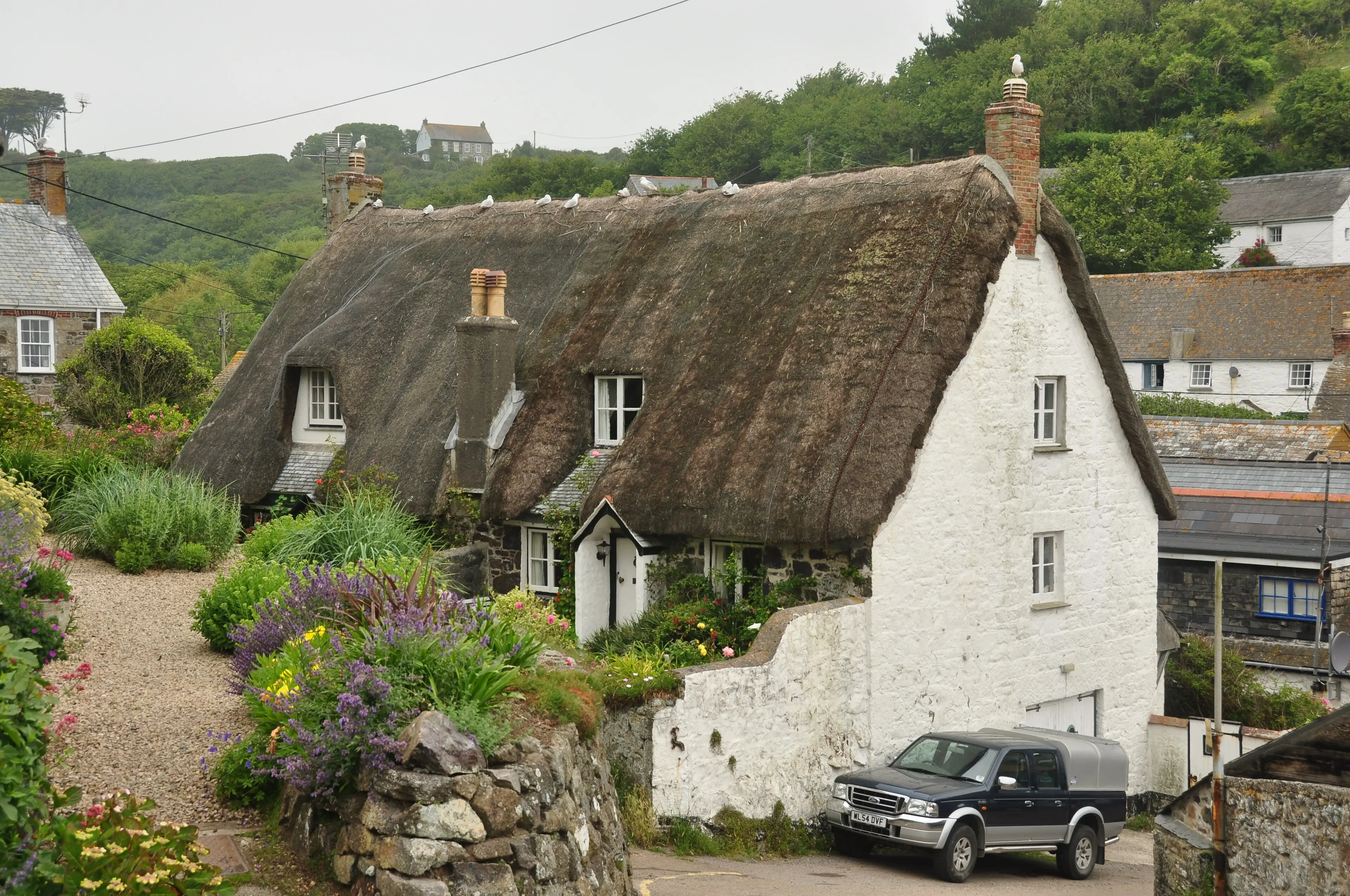
Cadgwith village on the Lizard Peninsula — thatched cottages above a small fishing cove with boats on the beach.
Nilfanion / CC BY-SA 4.0

A fishing village on the east side of the Lizard Peninsula that exists in a different century from the rest of Cornwall. Cadgwith has a pub (the Cadgwith Cove Inn, which does pasties and pints and hosts a weekly singing night on Fridays), a small beach where fishing boats are still winched up by hand, thatched cottages climbing the hillside, and almost nothing else. The village is too small and too remote to attract the crowds that overwhelm Coverack or Mullion, and it has resisted development with a quiet stubbornness that is pure Lizard. The coast path in both directions is excellent — south towards the Devil's Frying Pan (a collapsed sea cave that churns in a swell) and north towards Carleon Cove. The pub garden, with a view over the boats and the sea, is one of the best outdoor drinking spots in Cornwall. Come in the evening when the fishermen are back and the light is low.

The details

Lizard Peninsula · Small car park (steep hill) · Pub + cafe · Singing nights Friday · Coast path north and south · Fishing village atmosphere

Zennor

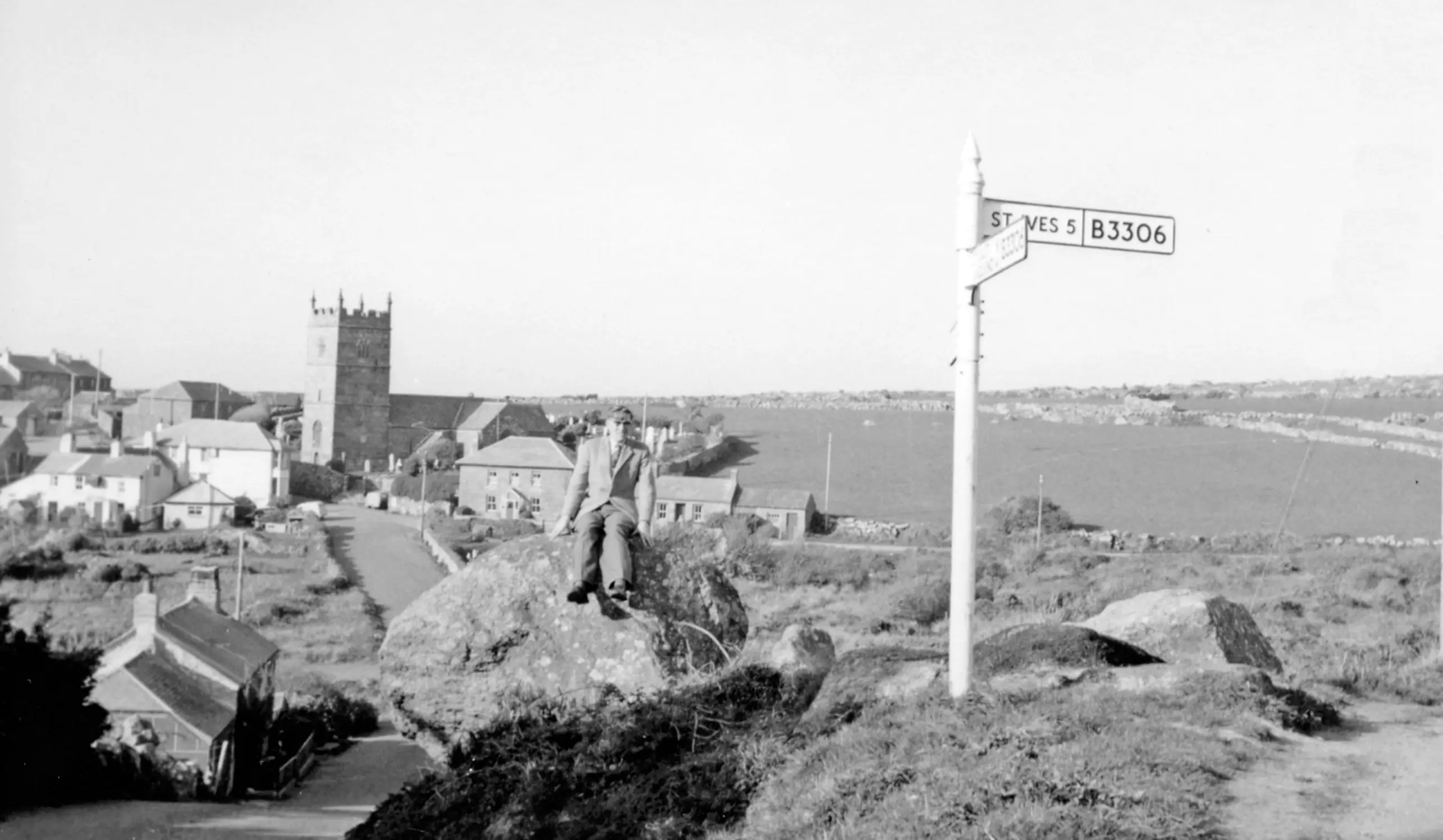
The landscape near Zennor in West Cornwall — moorland and ancient stone walls between the hills and the sea.
Geograph / CC BY-SA 2.0

A village between St Ives and St Just on the B3306, the most beautiful road in Cornwall. Zennor is tiny — a church, a pub (the Tinners Arms, excellent), a small museum (the Wayside Museum, which documents life in this landscape over five thousand years), and a cluster of granite cottages. The church has a famous carved mermaid on a fifteenth-century bench end — the Mermaid of Zennor, who supposedly lured a chorister into the sea at nearby Pendour Cove. The walk from Zennor to the cove is spectacular — twenty minutes across the clifftops with views that justify every step. D.H. Lawrence lived here during the First World War and was driven out by the locals, who suspected him of being a German spy. The Gurnard's Head, a mile up the road, is one of the best gastropubs in Cornwall. Between the church, the pub, the walk, and the food, Zennor is a full afternoon — and most visitors to St Ives never discover it.

The details

B3306 between St Ives and St Just · Tinners Arms pub · Wayside Museum · Walk to Pendour Cove (20 mins) · Gurnard's Head nearby · Limited parking

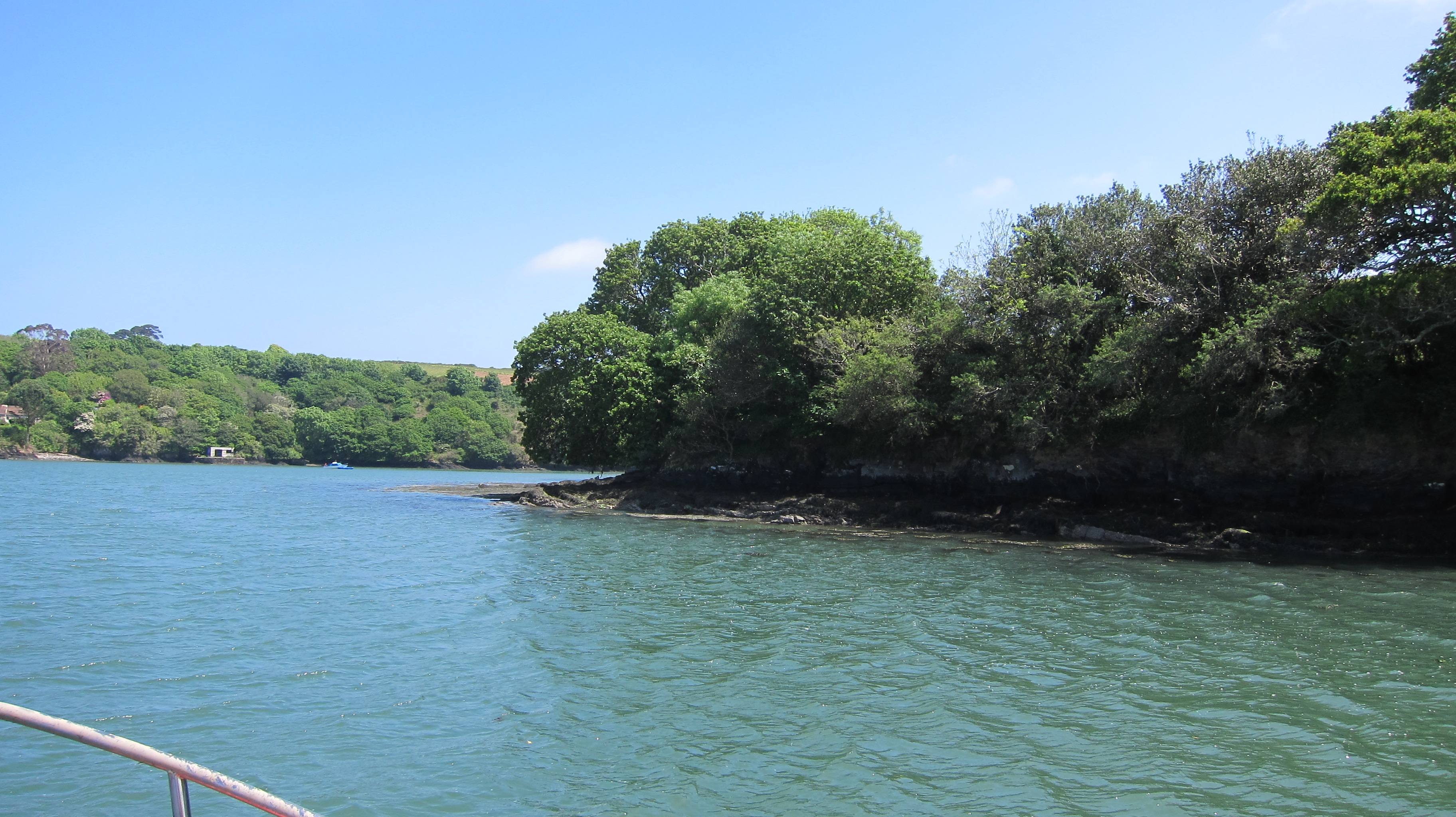
A tidal creek in south Cornwall — wooded banks, still water, and a rowing boat moored in the quiet.
Cornwall's south coast is threaded with tidal creeks and hidden estuaries that most visitors never discover — quieter, greener, and more atmospheric than the north coast beaches. Photograph · Dr Duncan Pepper / CC BY-SA 2.0

There is a particular quality to arriving at a beach that nobody seems to know about. You park in a field, walk through a farm gate, and then the coast appears — a cove with clean sand and nobody else there.

Fowey and the Hall Walk

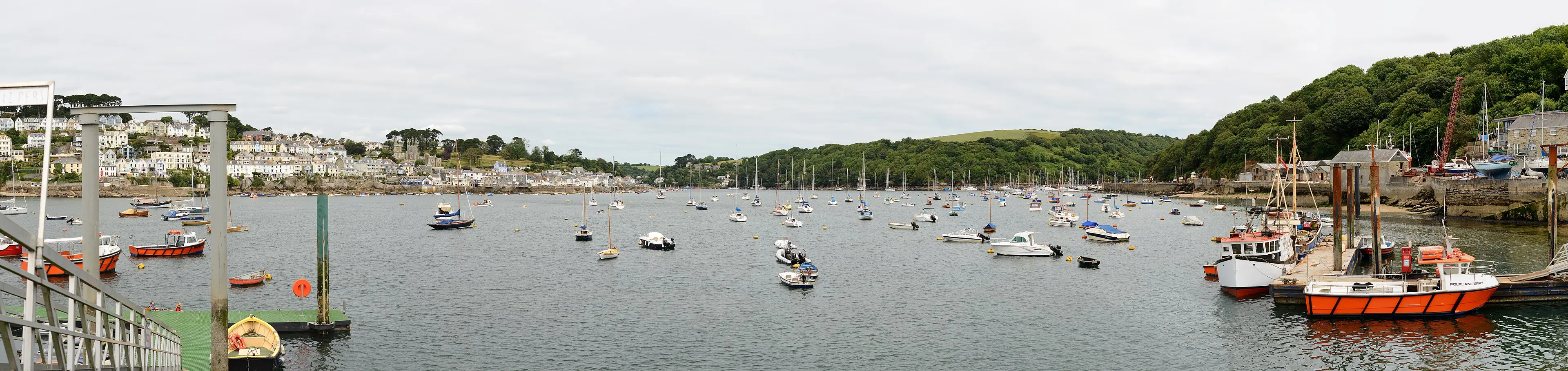
Fowey from the water — the colourful harbourside town and its deep-water estuary on the south Cornwall coast.
Oliver Mills / CC BY-SA 2.0

Fowey (pronounced Foy) is not exactly hidden — it's a proper town with bookshops, restaurants, and a literary festival — but it is dramatically quieter than Padstow, St Ives, or Newquay, and the quality of the experience is higher. The harbour is one of the deepest in Cornwall, still used by cargo ships loading china clay, and the town rises steeply from the waterfront in a tangle of narrow lanes and colourful houses. The Hall Walk is the thing that elevates Fowey from pleasant to exceptional — a four-mile circular walk from the town via the Bodinnick ferry that follows the east bank of the estuary through ancient woodland, crosses the head of Pont Creek (one of the most beautiful spots in south Cornwall), and returns via the Polruan ferry. The views from the Q Memorial above Pont Pill — looking down the creek to the sea — are the kind of thing you plan a holiday around. Daphne du Maurier lived here and set Rebecca's Manderley on the headland above the harbour.

The details

South coast · Town with full facilities · Hall Walk: 4 miles, 2–3 hours · Bodinnick + Polruan ferries · Du Maurier connections · Dwelling House for cream tea

The Roseland Peninsula

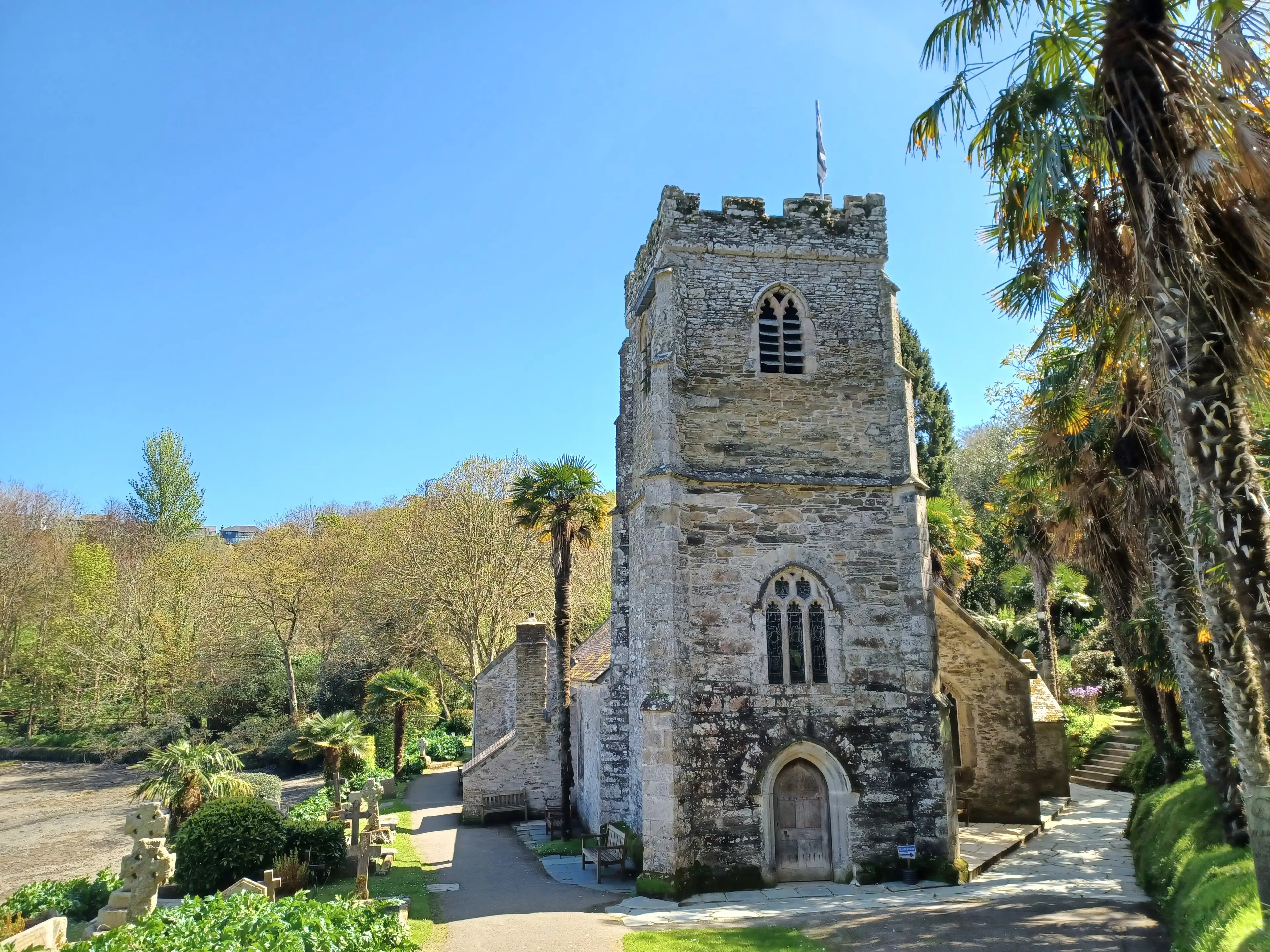
St Just in Roseland — the medieval church and subtropical gardens beside Carrick Roads, one of Cornwall's hidden treasures.
Simon Burchell / CC BY-SA 4.0

The Roseland is the peninsula between the Fal estuary and St Austell Bay, and it is the quietest corner of the Cornish coast. No famous beaches, no celebrity restaurants, no major attractions — just rolling farmland, tiny creeks, and the kind of peace that most of Cornwall has lost to tourism. St Just in Roseland has a thirteenth-century church in a subtropical churchyard that descends to the water's edge — John Betjeman called it the most beautiful churchyard in England. St Mawes is a genteel harbour village with a Henry VIII castle and a passenger ferry to Falmouth. The coast path from St Anthony Head lighthouse to Towan Beach is empty and beautiful. Portscatho is a fishing village with a good pub (the Plume of Feathers) and a small beach that doesn't appear on any top-ten lists. The Roseland rewards a day of slow driving, stopping wherever the road turns towards the water. It is the anti-Newquay — and that's precisely the recommendation.

The details

East of Truro · King Harry Ferry from Truro side · St Just in Roseland church · St Mawes castle · Coast path · Portscatho · Slow driving territory

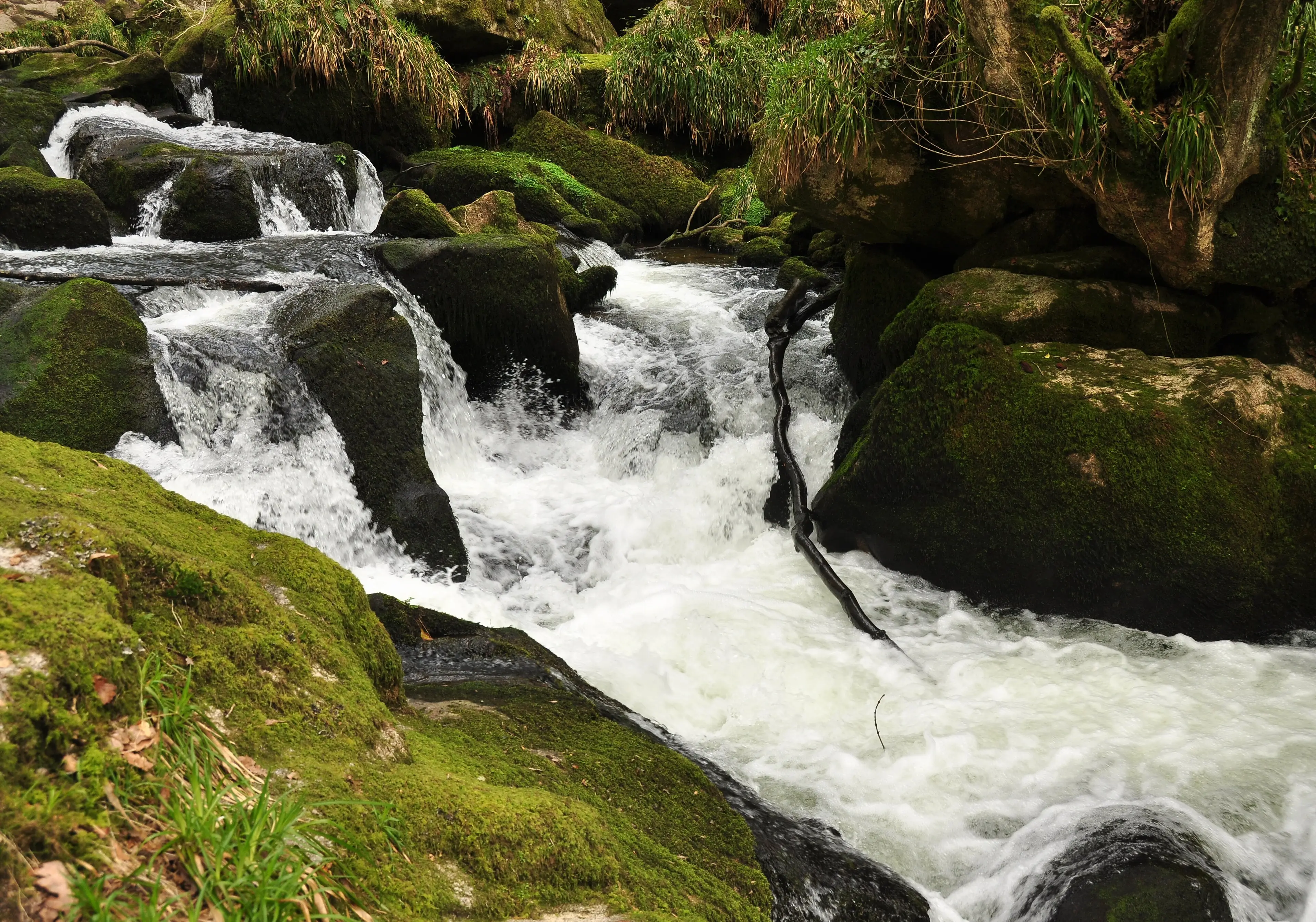
Golitha Falls

Golitha Falls on Bodmin Moor — a series of cascades through ancient oak woodland on the River Fowey.
Nilfanion / CC BY-SA 3.0

A series of cascades on the upper River Fowey at the southern edge of Bodmin Moor, set in a National Nature Reserve of ancient oak woodland. Golitha Falls is not a single dramatic waterfall — it's a quarter-mile stretch of river tumbling over granite boulders through a canopy of twisted oaks draped in moss and ferns. The effect is more Tolkien than Cornwall, and on a misty morning the place feels genuinely enchanted. The walk from the car park is flat and easy — ten minutes to the main falls, with a loop trail of about a mile through the woodland. After heavy rain the river is spectacular. In late spring the bluebells under the oaks are as good as anywhere in England. Golitha Falls is one of the few places in Cornwall that is genuinely better inland than on the coast, and it's the perfect half-day companion to a morning on Bodmin Moor or an afternoon in Liskeard, which is ten minutes' drive and has good pubs.

The details

Bodmin Moor (south edge) · Free car park · 10-minute walk · Flat, easy path · National Nature Reserve · Best after rain · Bluebells in spring

Port Quin

Port Quin — a tiny inlet on the north Cornwall coast with a handful of cottages and a rocky cove.
Nilfanion / CC BY-SA 4.0

A hamlet on the north coast between Port Isaac and Polzeath that was abandoned in the nineteenth century when the fishing failed and the men left. The story that the entire village died in a single storm is a myth — they left gradually for better prospects — but the atmosphere of the place feeds the legend. A handful of cottages (now National Trust holiday lets), a rocky inlet, and nothing else. The coast path from Port Quin to Port Isaac is three miles of some of the finest clifftop walking in Cornwall — high, exposed, and dramatic, with views across to Tintagel on a clear day. Walking in the other direction, towards Polzeath, the path passes Doyden Castle — a folly built in the 1830s as a gambling den and now a National Trust holiday cottage. Port Quin has no facilities, no pub, no shop, and no mobile signal. It is the kind of place where you sit on a rock, eat a sandwich, and listen to the sea. The simplicity is the point.

The details

Between Port Isaac and Polzeath · NT car park · No facilities · Coast path to Port Isaac (3 miles) · Doyden Castle nearby · Gloriously empty

Finding the quiet places

The principle behind all of these places is the same: the famous spots in Cornwall are famous because they're easy to reach, well-signposted, and have car parks large enough for coaches. The quiet places are quiet because they require a little more effort — a longer walk, a narrower lane, a willingness to arrive without knowing exactly what you'll find. The OS Explorer maps (OL102 for the Lizard, Falmouth and Helston; OL109 for Bodmin Moor; 106 for Newquay and Padstow) are the best tools for finding them. Look for the dead-end lanes that stop at the coast, the footpath symbols leading to unnamed coves, the tiny blue marks that indicate a spring or a ford.

The other secret is timing. Even the busy beaches are quiet before 9am and after 5pm in summer. In September and October the weather is often as warm as July but the crowds have gone. And in winter, everywhere in Cornwall is hidden — you'll have the coast path, the beaches, and the headlands to yourself.

A cottage off the beaten path

Stone barn on the Roseland Peninsula, sleeps two

Converted barn down a farm track with views over the Fal estuary. No neighbours, no traffic, and a path to the water. The kind of place you find by accident and book again immediately.

From £425 / week shoulder season · £695 peak

See dates on Sykes

AllCornwall may earn a commission on this link — it never affects the price you pay.