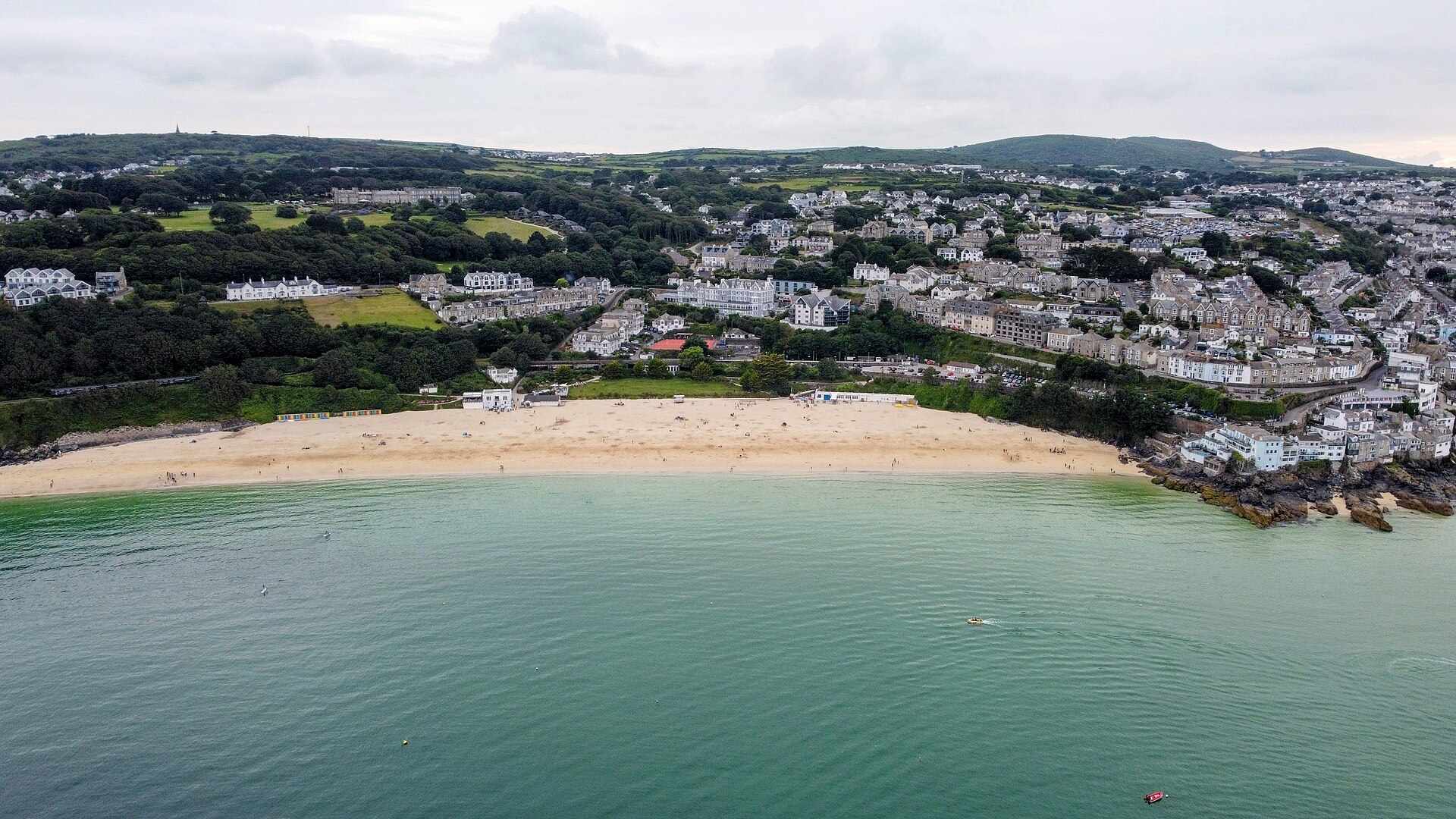
Porthminster Beach — golden sand and turquoise water below St Ives, one of Cornwall's finest beaches.

Cornwall · Beaches

Beaches in Cornwall.

From the Atlantic surf of the north coast to the sheltered coves of the south — every beach worth knowing, organised by town.

Photograph — Fæ / Wikimedia Commons (CC BY-SA 3.0)

Start here

Cornwall has more than three hundred named beaches. This is the considered shortlist — organised by town, written from experience, and honest about which ones are worth the parking.

Cornwall's coast is a county of two halves. The north coast faces the open Atlantic and gets it raw — long surf-breaks at Newquay, Bude and Polzeath, granite headlands at Tintagel and Bedruthan, beaches that disappear at high tide and reappear three times the size at low. The south coast is the quieter half — sheltered estuaries at Falmouth and Fowey, fishing coves around Mousehole, the calmest swimming water in England at Porthminster. Pick the coast that suits the trip, not the trip that suits the coast.

The most useful question to ask before a Cornish beach day isn't "which is the prettiest?" — they're all photogenic — it's "what do I actually want from a beach?" Surf, swim with young children, walk a dog year-round, find somewhere empty, eat well within walking distance, paddle in clear water? Each of those is a different beach in a different part of the county. The list below is organised by town because that's the most practical lens: where you're staying determines which beaches you can sensibly reach in a day.

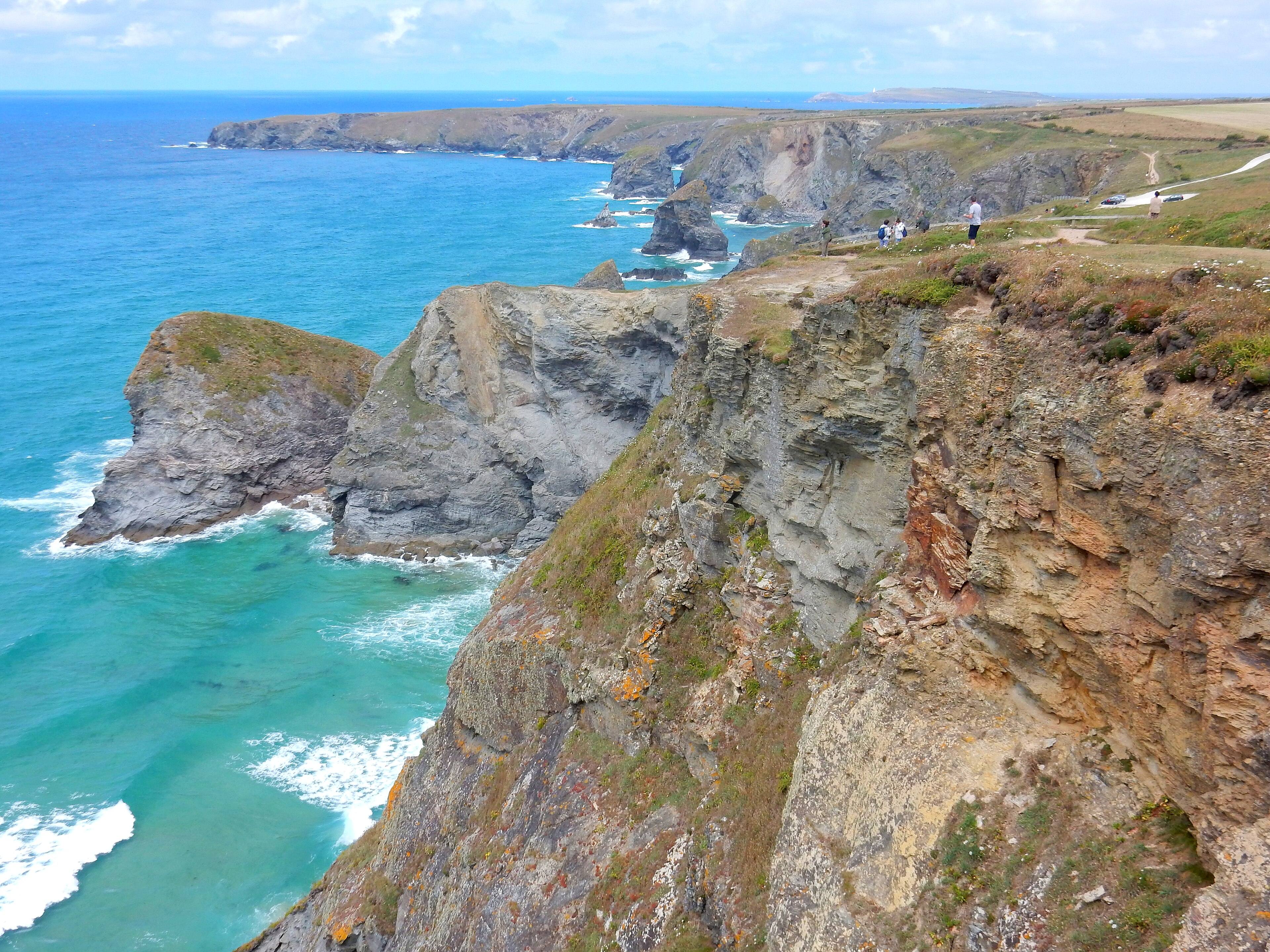
Bedruthan Steps on Cornwall's north coast — a row of granite sea-stacks rising from the Atlantic at low tide, with a long stretch of sand below the cliffs.
Bedruthan Steps — north coast Cornwall at its most cinematic. Walk down the steep stairway from the National Trust car park. Photograph · Wikimedia Commons (CC BY-SA)

How to choose a Cornwall beach

For families with small children

Look for shallow water, soft sand, lifeguards, and a short walk from a real car park — ideally with toilets. The shortlist is in our best family beaches guide: Porthminster (St Ives), Gyllyngvase (Falmouth), Daymer Bay (Camel Estuary), Summerleaze (Bude), Porthcothan (north coast) and Kennack Sands (Lizard). All six pass the parking test and have facilities you'd actually use.

For surf

Fistral (Newquay) is the famous one, but Watergate Bay, Polzeath, Widemouth Bay and Sennen Cove all hold consistent Atlantic swell. Beginners do best on the gentler beach breaks at Perranporth, Polzeath and Sennen — all have established surf schools. Read our surfing for beginners guide for which beach to book a lesson at.

For dogs

Most of Cornwall's main beaches restrict dogs from Easter Day to 1 October. The year-round dog-welcome shortlist includes Daymer Bay, Sandymouth, Northcott Mouth, Gunwalloe Church Cove, the southern end of Summerleaze and Polzeath out of season. Our dog-friendly Cornwall guide has the full list with parking and walk distances.

For somewhere empty

The headline beaches (Kynance, Porthcurno, Fistral) fill by mid-morning in summer. The empty alternatives are at the same standard if you're willing to walk: Pedn Vounder beneath Treen Cliff, Lantic Bay east of Polruan, Greeb Beach near Lizard Point, Porthchapel west of Porthcurno. Most require a 10–20 minute walk down a path with no facilities. Take everything you need with you.

Don't try to do both coasts in a day. Pick one, do it properly, and use the wider trip to cover the other. The roads between them are slower than they look on the map.

What we tell first-time visitors
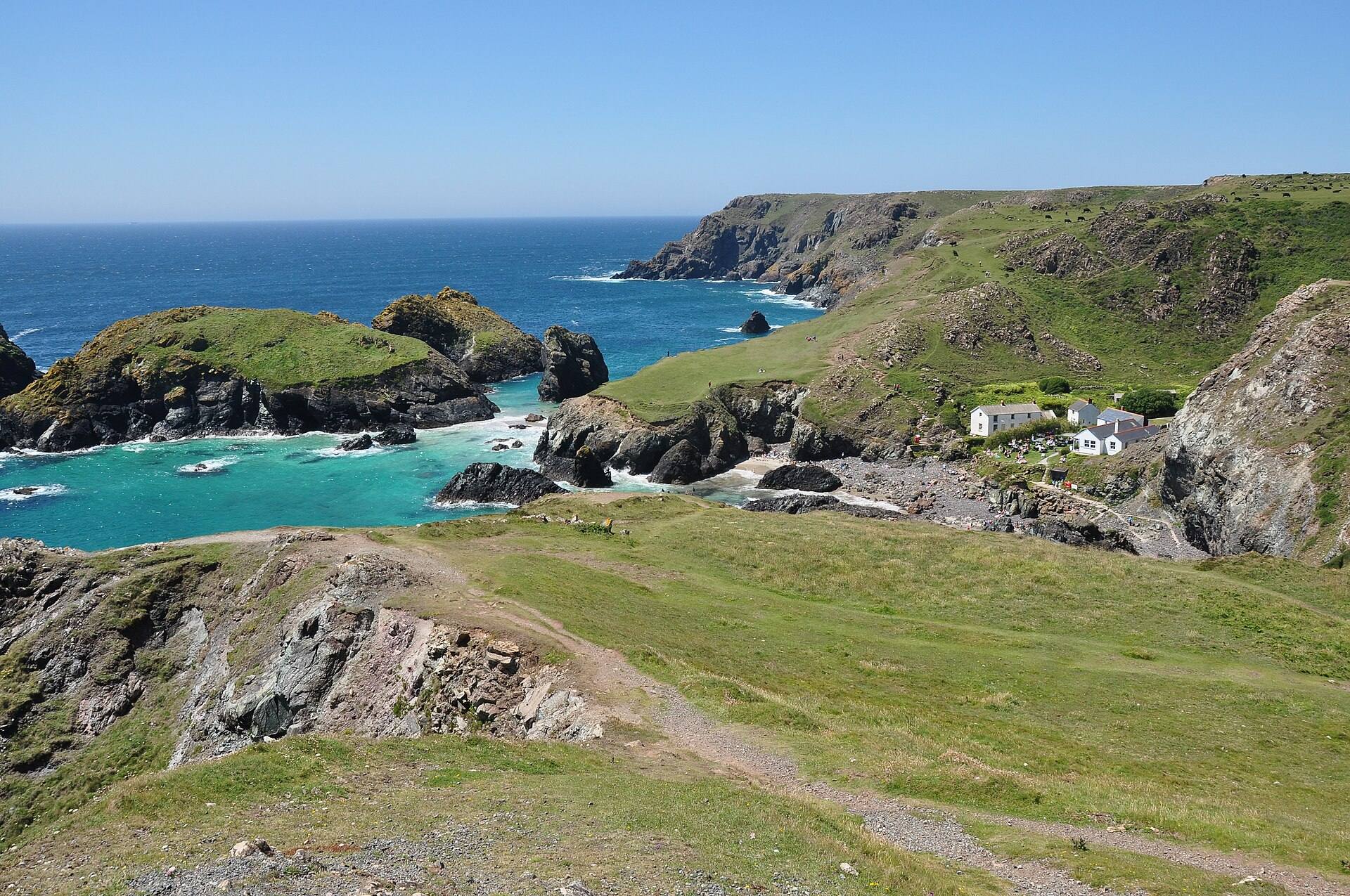
Kynance Cove on the Lizard Peninsula — turquoise water between serpentine sea-stacks and a steep cliff path down to the sand.
Kynance Cove — Cornwall's most painted view. National Trust members park free at the clifftop car park. Photograph · Wikimedia Commons (CC BY-SA)

When to visit Cornwall beaches

The sea hits its warmest in mid-September — three months of summer sun stored in the water, with the crowds gone after the August bank holiday. June is the next-best window for a similar reason: long days, post-half-term quiet, and the gardens at their best. July and August deliver Cornwall at full volume — every car park full by ten, every restaurant booked weeks ahead — and they're worth doing once for the festival energy, but most locals avoid the headline beaches in those eight weeks. Off-season Cornwall is the connoisseur's Cornwall: empty sands, dog-friendly everywhere, dramatic weather you can watch from a pub with a wood burner.

Tides matter more here than almost anywhere else in England. Several of the best beaches — Pedn Vounder, Marazion across to St Michael's Mount, the rock pools at Chapel Porth — are tide-dependent. Check the tide tables the night before. Apps like Magicseaweed (for surf) and the Tides Near Me widget cover most of the coast. The difference between high and low tide on the north coast can be six metres of vertical sand — beaches you saw at midday will look unrecognisable by four o'clock.

The practical realities

Parking is the largest hidden cost of a Cornwall beach day. Expect £6–10 per day in summer at council and National Trust car parks. Pay-by-phone is now standard — install RingGo or PayByPhone on the cottage drive before you set off, because signal in beach car parks is patchy. National Trust members park free at NT-managed beaches like Kynance Cove, Polurrian and Holywell Bay. Several smaller beaches have no formal car park at all, just verge parking that fills by mid-morning — get there before nine or have a backup plan.

RNLI lifeguards patrol the main beaches from mid-May to late September. Always swim between the red-and-yellow flags. Rip currents are a serious risk on the north coast — the Atlantic is stronger than it looks. If you find yourself caught in one, swim parallel to the shore until you're out of it, then back in. Don't fight the current head-on. The lifeguard coverage is genuinely good; trust it. Out of season, swim with company, in shallow water, and only where you can see the way back to land.
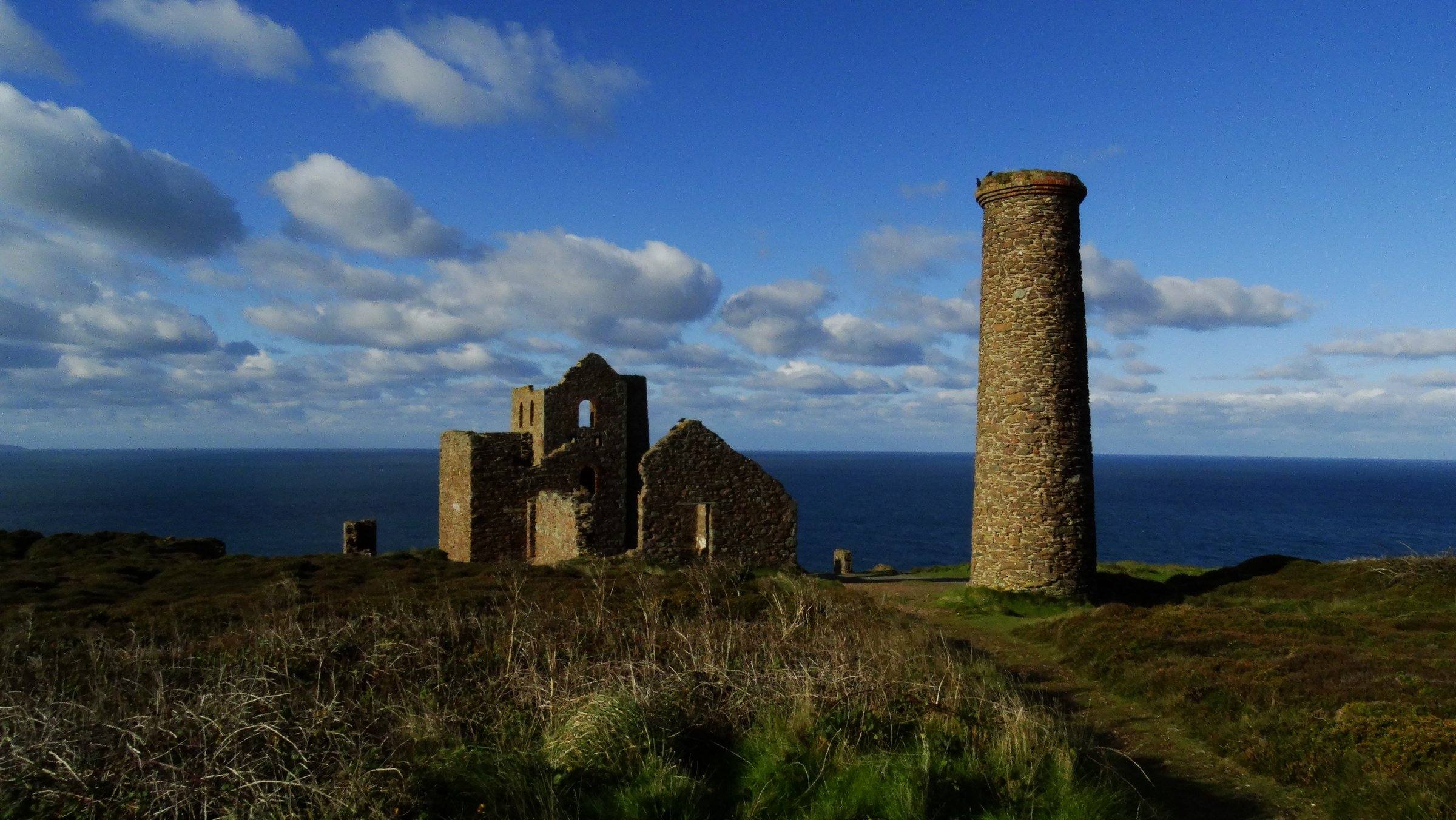
The South West Coast Path between St Agnes and Chapel Porth — heather on the headland and the Atlantic open to the west, with the silhouette of the old engine house at Wheal Coates above.
The coast between St Agnes and Chapel Porth — the path is the introduction to most Cornish beaches that don't have a car park. Photograph · Wikimedia Commons (CC BY-SA)

The AllCornwall letter

Cornwall, in your inbox.

One short letter most weeks. New guides, the conditions worth watching, and the few places we'd send a friend. No spam, no sponsored noise, unsubscribe in one click.

No spam. Unsubscribe in one click.