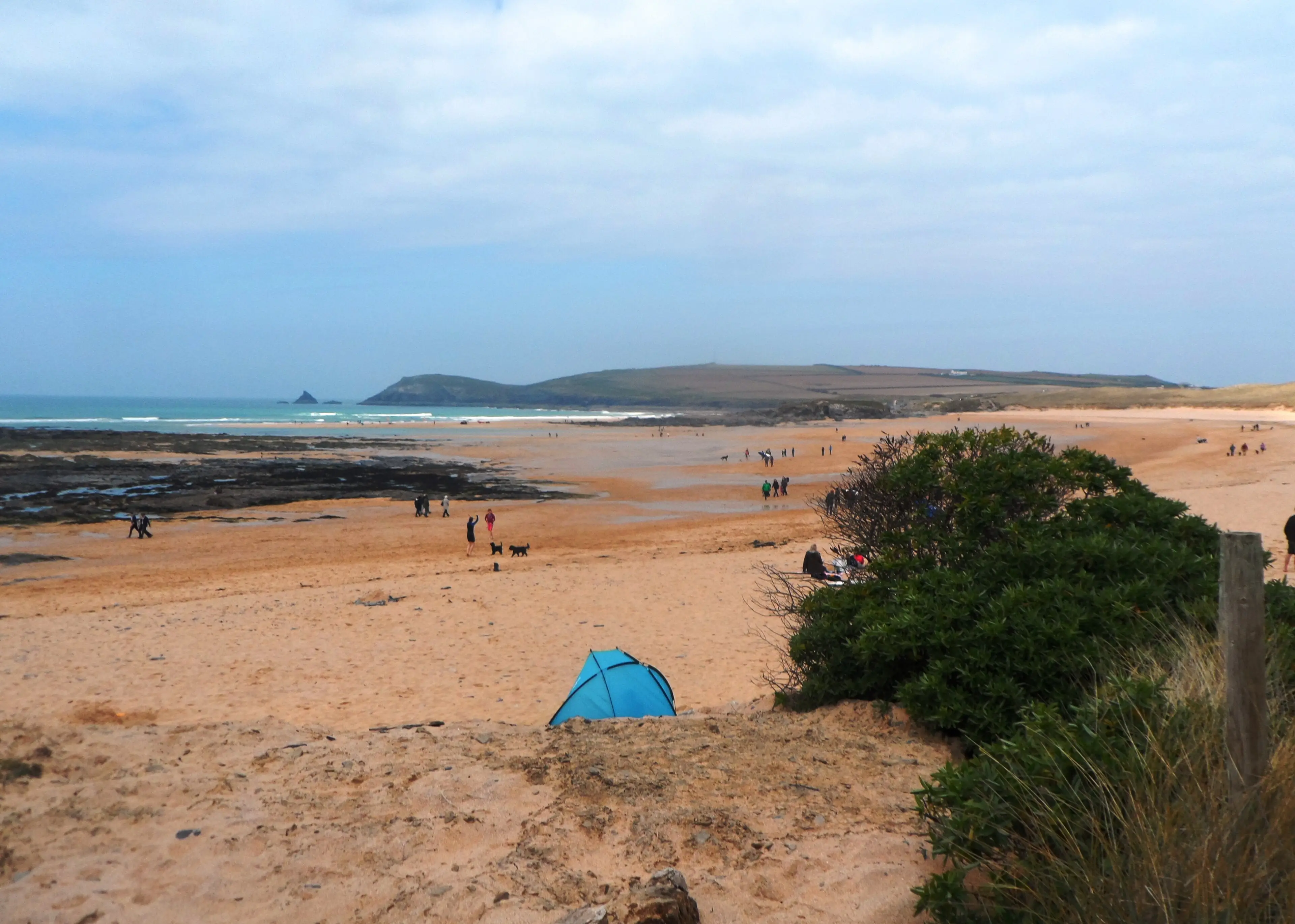
A beginner surfer riding whitewash on a wide Cornish beach — blue sky, clean waves, and the glow of a good first session.

Cornwall · Surfing

Surfing in Cornwall — the honest beginner's guide.

Where to learn, what to expect, and how to avoid the mistakes that ruin a first surf holiday.

Photograph — Airwolfhound / CC BY-SA 2.0

Before you paddle out

Cornwall is the best place in Britain to learn to surf. The Atlantic delivers consistent swell to miles of sandy beaches, the water is cleaner than it's been in decades, and there are more qualified surf schools per mile of coastline than anywhere else in Europe. None of which means it's easy. Surfing is harder than it looks, colder than you expect, and more addictive than anyone warns you. This guide is the briefing you need before your first lesson — honest, practical, and written by someone who remembers what it was like to not know which end of the board was the front.

The first thing to understand about learning to surf in Cornwall is that you will spend most of your time not surfing. You will spend time lying on the beach watching waves and trying to understand which ones are worth paddling for. You will spend time paddling and getting nowhere. You will spend time being tumbled in whitewash and coming up with sand in your wetsuit. You will spend time sitting on your board in the lineup, waiting, while better surfers catch wave after wave around you. And then, at some point — maybe your first lesson, maybe your third — you will stand up, the board will move under you, and the ocean will carry you towards the beach, and you will understand why people rearrange their lives around this feeling.

Cornwall's north coast faces the Atlantic and receives the full force of every swell that crosses three thousand miles of open ocean. The beaches are wide, sandy, and backed by dunes or cliffs. The surf breaks are beach breaks — waves breaking over sand, not reef — which means the bottom is forgiving when you fall (and you will fall, constantly). The eight beaches below are the best places in Cornwall to learn, each one chosen for its combination of consistent surf, qualified instruction, and the kind of gentle, rolling waves that let a beginner find their feet without being punished for every mistake.

Fistral Beach, Newquay
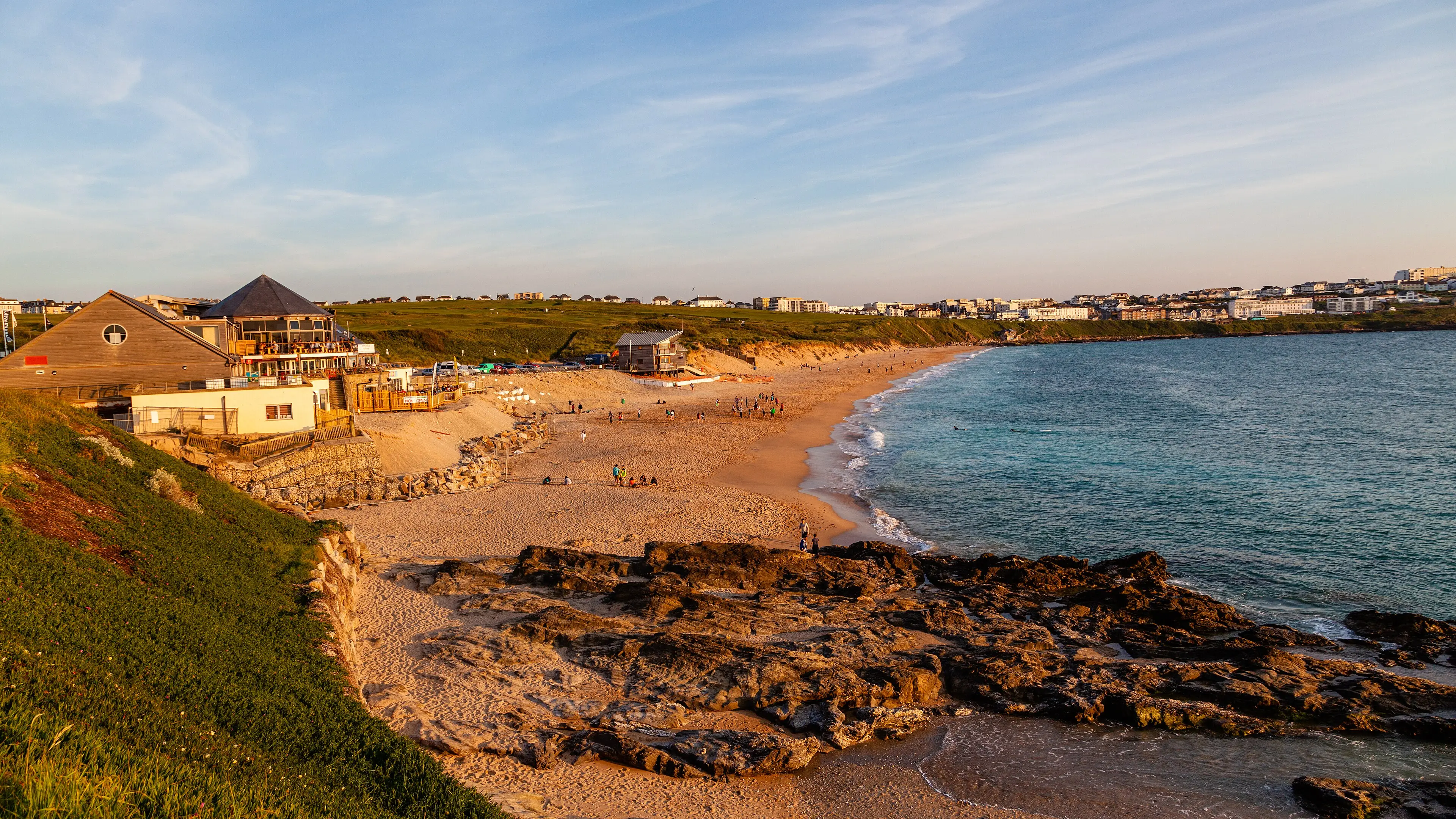
Fistral Beach in Newquay — Cornwall's most famous surf beach, with lines of whitewash rolling towards the shore.
Otto Domes / CC BY-SA 4.0

Fistral is where British surfing began and where it still feels most alive. The beach faces west-northwest and picks up every Atlantic swell, which means it's almost always rideable — a crucial quality for a beginner who has booked a week's holiday and needs the waves to cooperate. The south end of the beach is sheltered by the Towan headland and offers smaller, more manageable waves; the north end is more exposed and better suited to intermediates. There are at least half a dozen surf schools operating here, including the Fistral Beach Surf School and the International Surfing Centre, and competition for students keeps prices fair and standards high. Newquay itself is the closest thing Cornwall has to a surf town — board shops, cafes, hostels, and the kind of easy-going energy that makes a surf holiday feel like a proper holiday rather than an endurance test. The water quality is excellent and the lifeguard cover is among the best in the country.

The details

Newquay · West-northwest facing · Consistent swell · 6+ surf schools · Lifeguarded May–Sep · Large car parks · Cafes and facilities · Suitable for all levels
Polzeath

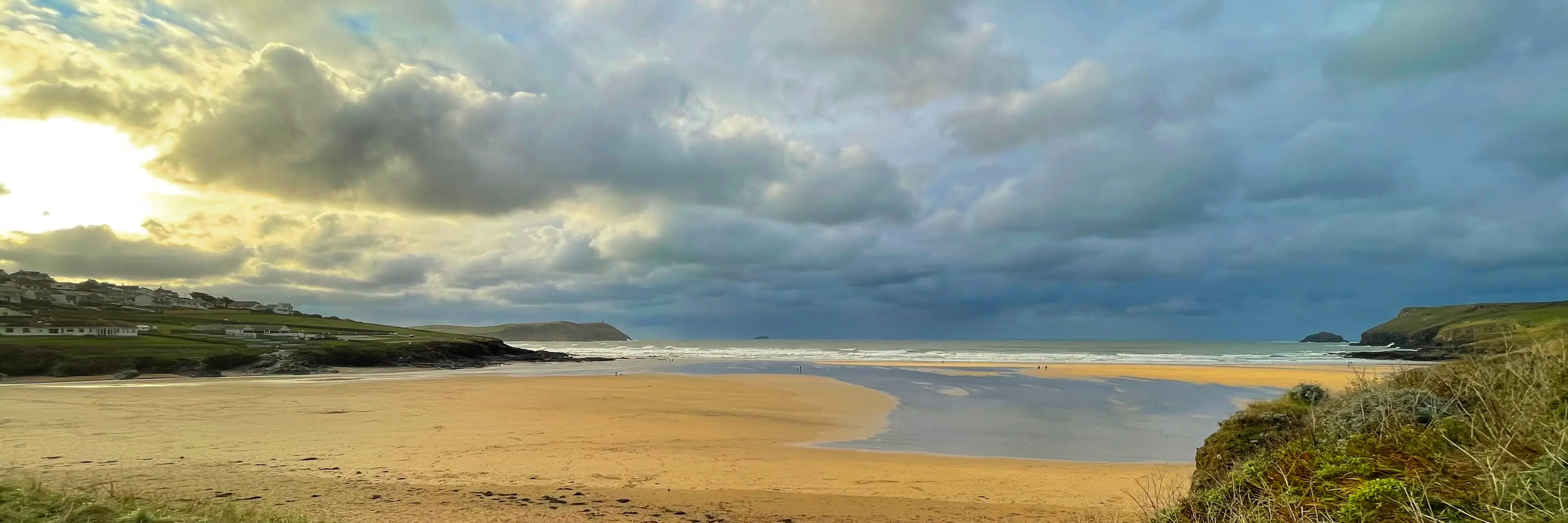
Polzeath beach at low tide — a wide expanse of sand with gentle surf, popular with families learning to surf.
Romfordian / CC BY-SA 4.0

Polzeath is the family surfing beach — the one parents bring their children to because the waves are gentle, the sand is wide, and the village behind the beach has ice cream shops and a relaxed atmosphere that makes the whole experience feel safe and manageable. The beach faces northwest and is partially sheltered by Pentire Point, which takes the edge off bigger swells and creates the kind of small, slow-breaking waves that are ideal for standing up for the first time. Surf's Up and the Polzeath Surf Academy both run excellent beginner lessons. The car park fills early in summer (arrive before 10am or park in the overflow field above the village), but the beach itself is big enough to absorb the crowds without feeling cramped. Polzeath is also one of the prettiest surf beaches in Cornwall — the Camel Estuary is visible to the south, Pentire to the north, and the light on the water in the evening is worth the trip alone.

The details

North Cornwall · Northwest facing · Sheltered by Pentire · Family-friendly · Surf schools on beach · Village amenities · Car park fills early in summer

Widemouth Bay

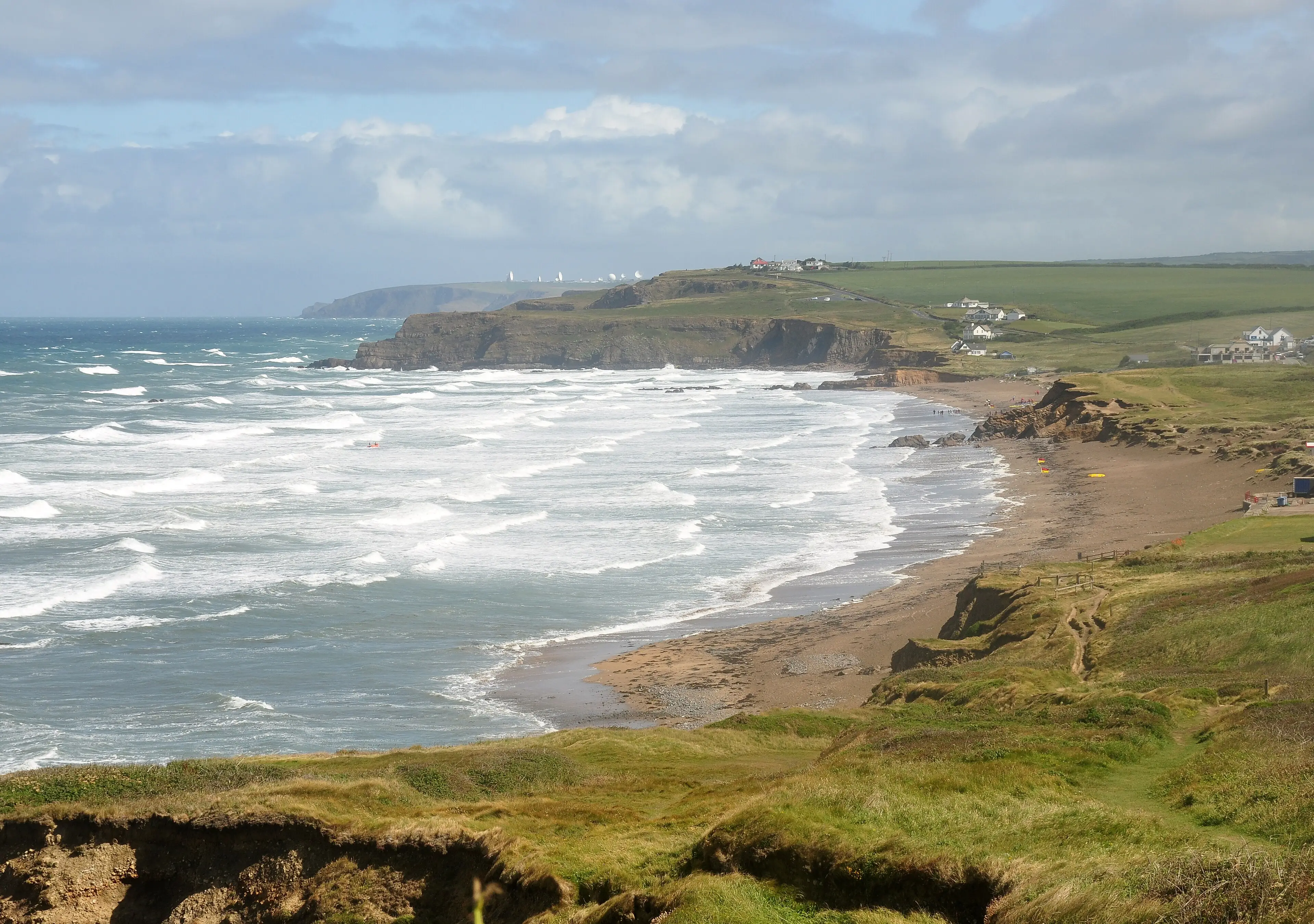
Widemouth Bay near Bude — a long, flat beach with consistent whitewash perfect for beginner surfers.
Nilfanion / CC BY-SA 3.0

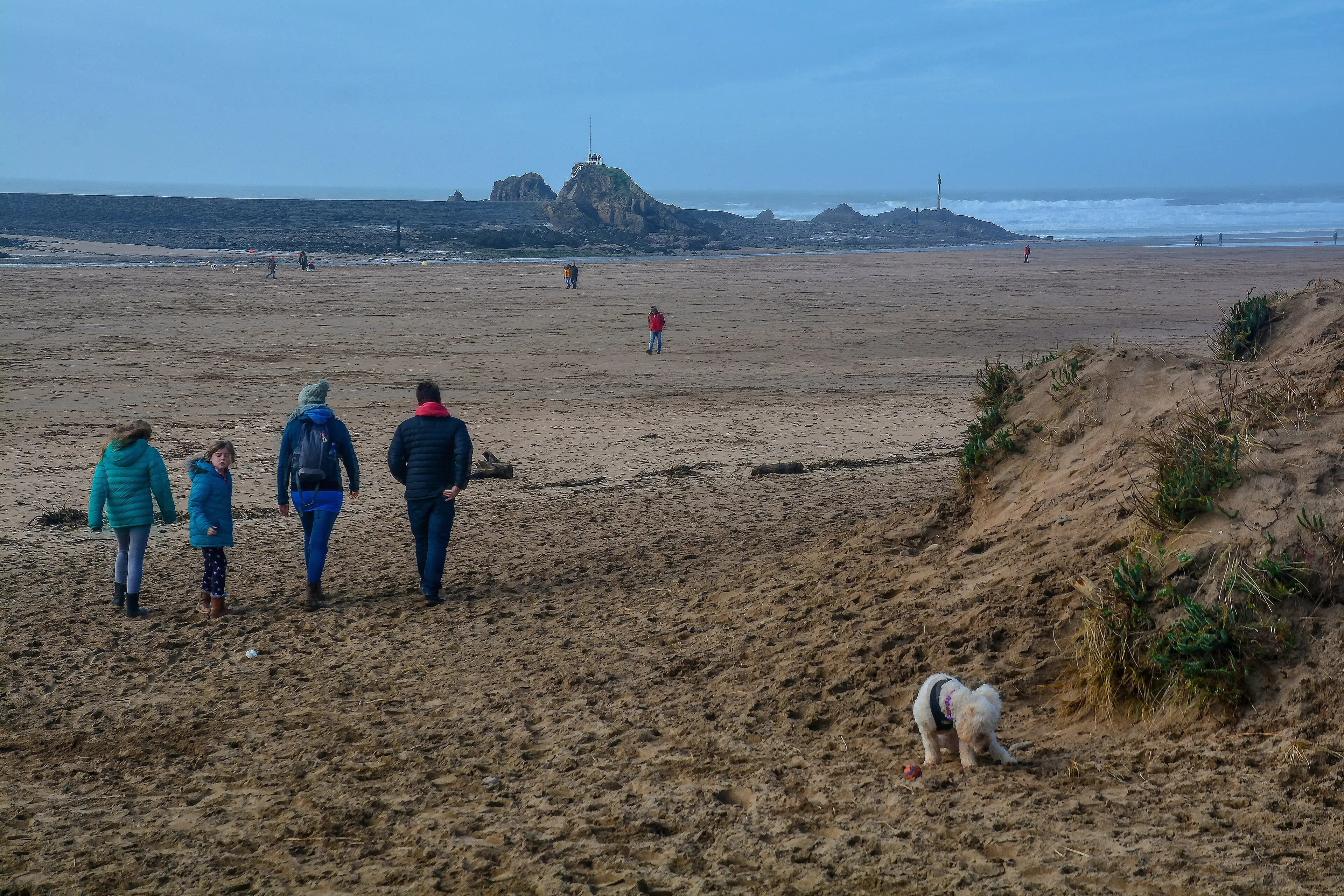
Two miles south of Bude, Widemouth Bay (pronounced Wid-muth) is the beach where Bude's surf schools do most of their teaching. The reasons are practical: the beach is long and flat, the waves break gently over sand, and there's enough space for twenty surf lessons to happen simultaneously without anyone getting in anyone else's way. At low tide the beach extends so far that the whitewash rolls in for a hundred metres, giving beginners a long, forgiving ride to practise their pop-up. The Big Blue Surf School and Outdoor Adventure both operate here and have excellent reputations. The beach is lifeguarded through summer and has a large National Trust car park at the north end. The only downside is wind — Widemouth is exposed, and an onshore wind can turn clean waves into a choppy mess. Check the forecast and go on a day with light winds or an offshore breeze for the best experience.

The details

2 miles south of Bude · West facing · Very long beach · Multiple surf schools · NT car park · Lifeguarded · Exposed to wind · Best in light/offshore conditions

Harlyn Bay

Harlyn Bay — a sheltered sandy beach near Padstow, known for clean surf when the rest of the north coast is blown out.
Anthony Parkes / CC BY-SA 2.0

Harlyn is the beach that works when everywhere else doesn't. It faces north rather than west, which means it's sheltered from the prevailing southwesterly wind that ruins so many north coast surf sessions. When Fistral is a blown-out mess of choppy whitewash, Harlyn is often clean and glassy — lines of swell wrapping around the headland and breaking in orderly rows across the sand. This makes it the most reliable beginner beach in the Padstow area and a genuine secret weapon for anyone planning a surf trip. The beach is smaller than Fistral or Widemouth, which gives it an intimate feel, and the Harlyn Surf School runs well-organised lessons from the beach car park. The village of Harlyn is tiny — a handful of houses and a campsite — but Padstow is ten minutes away by car, with all its restaurants and harbour charm. Harlyn also has excellent rock pools at low tide, making it a good choice for families who want to split their day between surfing and exploring.

The details

Near Padstow · North facing · Sheltered from SW winds · Works when west-facing beaches are blown out · Surf school on beach · Rock pools at low tide · Small car park

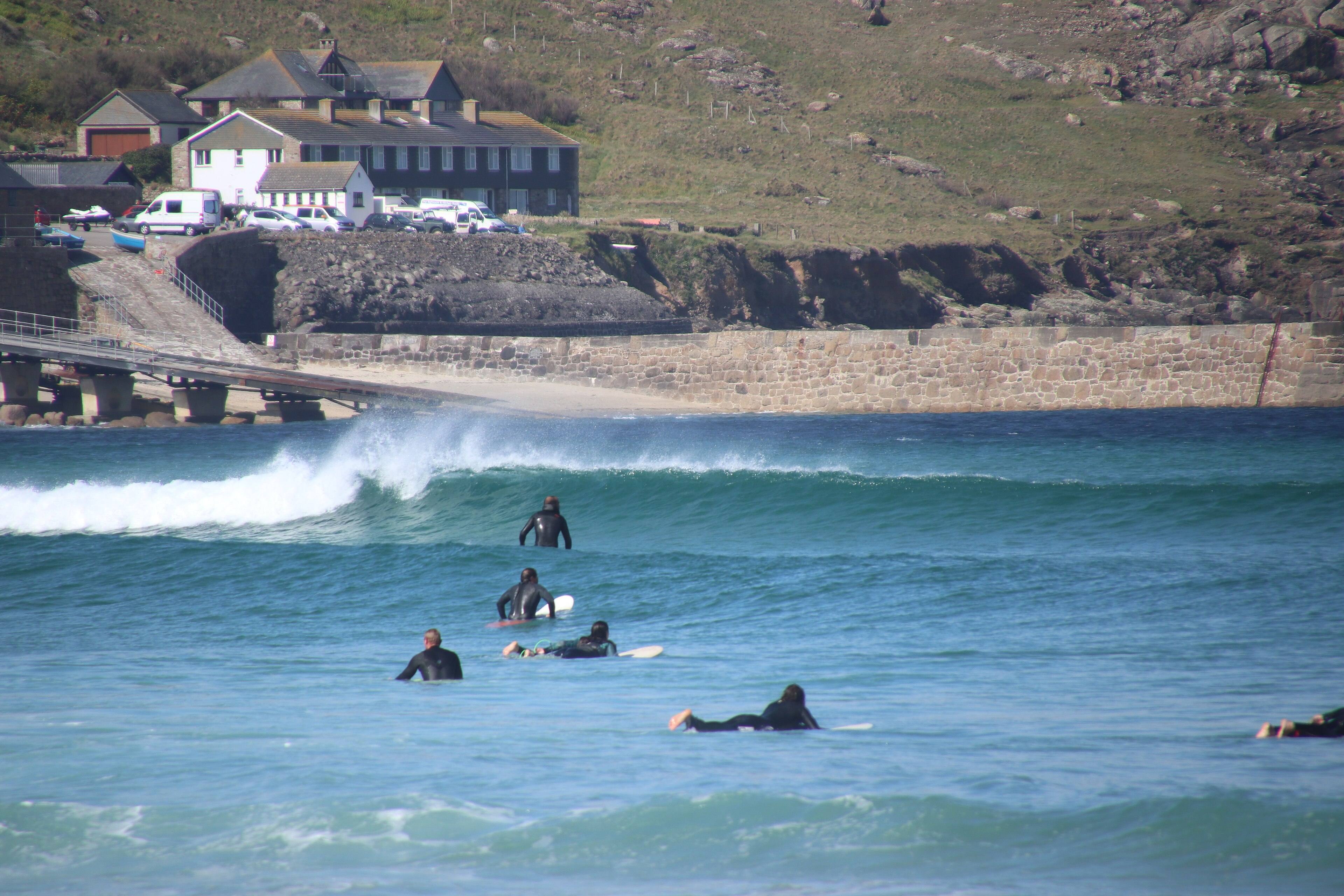
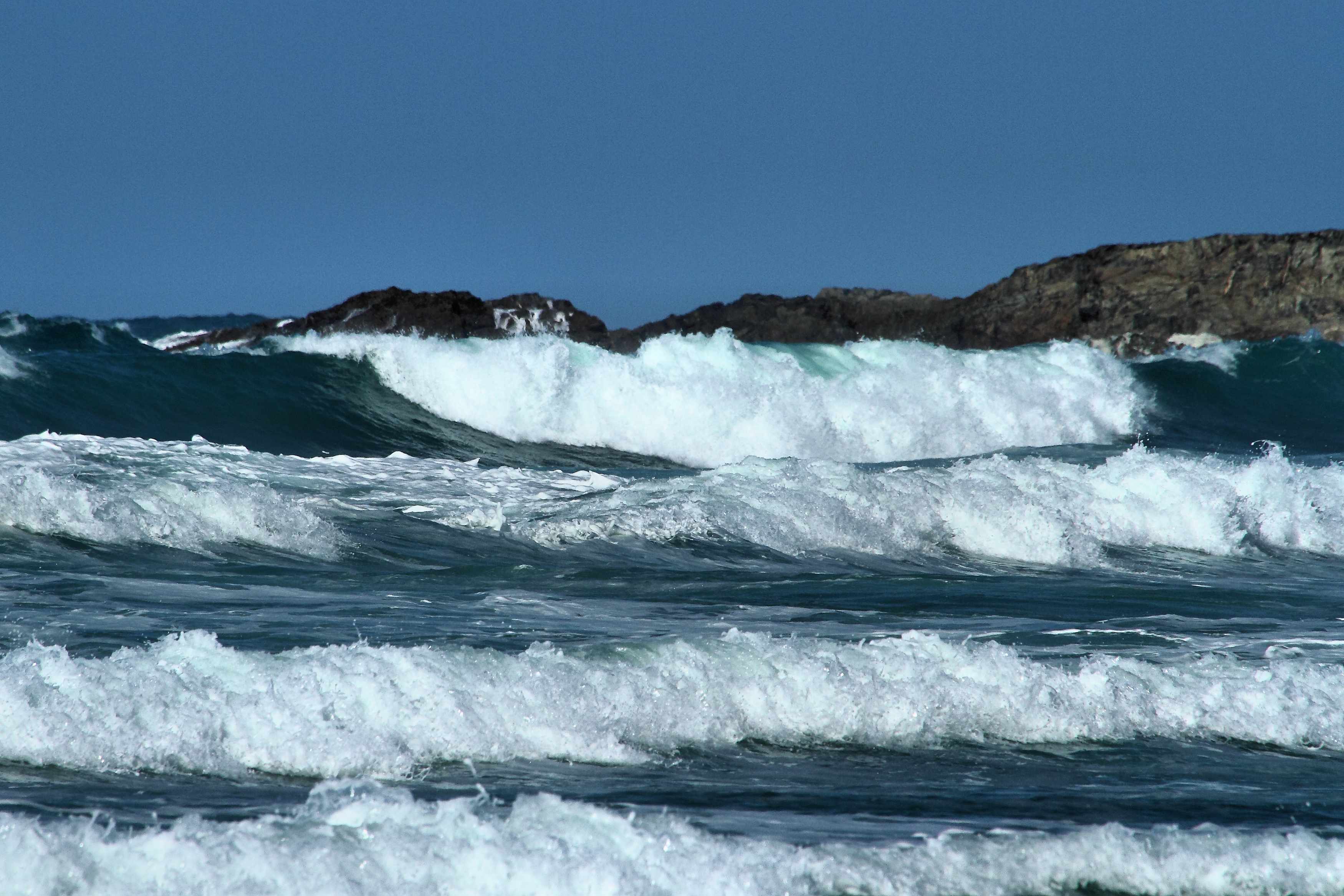
Surfers waiting in the lineup at a Cornish beach — wetsuited figures sitting on boards beyond the break, waiting for the next set.
The lineup — where surfers wait for waves beyond the breaking zone. As a beginner you'll spend most of your time in the whitewash closer to shore, but this is what you're working towards. Photograph · Cyr~commonswiki / CC BY-SA 3.0

At some point — maybe your first lesson, maybe your third — you will stand up, the board will move under you, and the ocean will carry you towards the beach, and you will understand why people rearrange their lives around this feeling.

Porthmeor Beach, St Ives

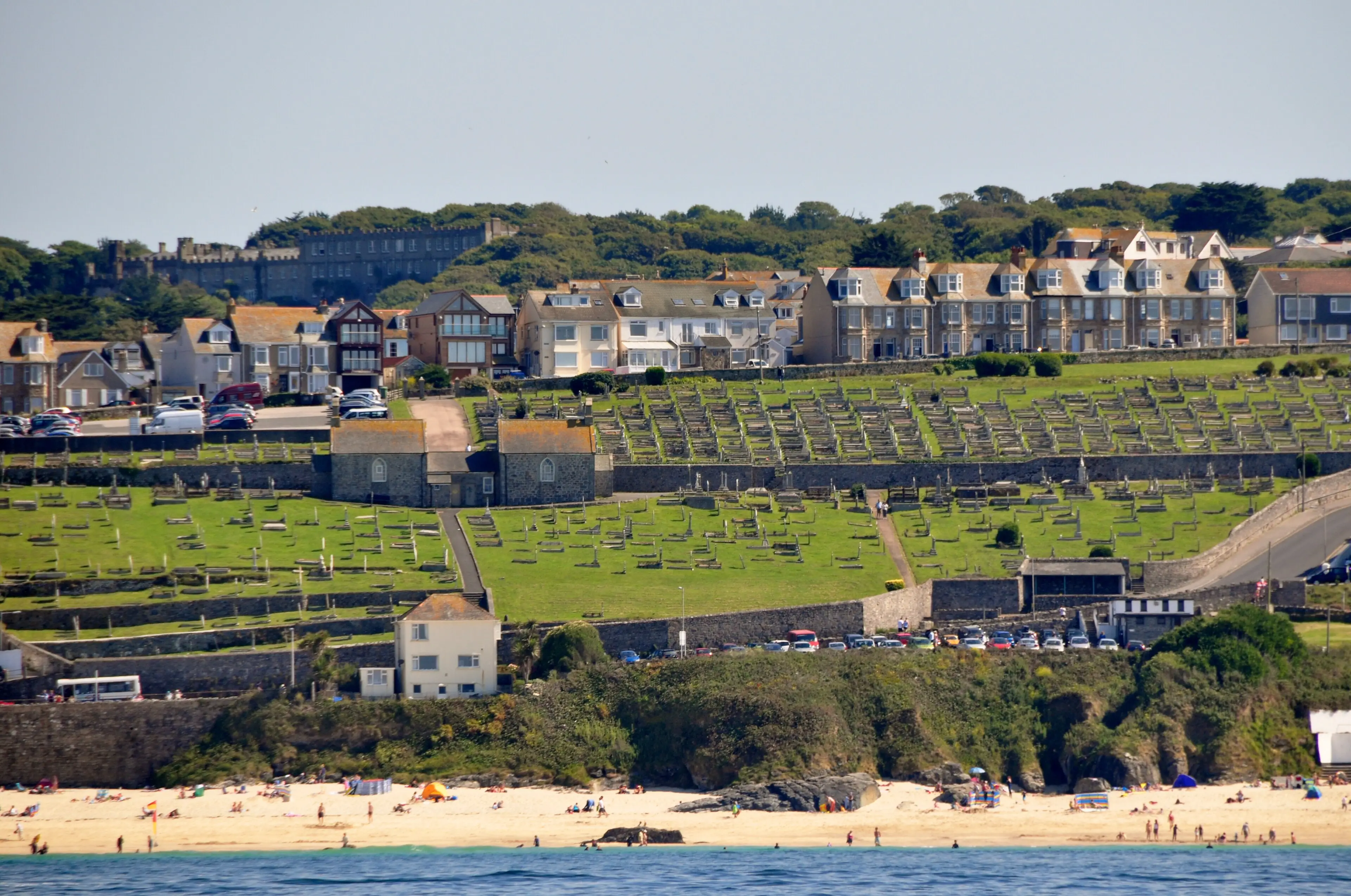
Porthmeor Beach in St Ives — turquoise water and the Tate gallery on the headland above, with surfers in the whitewash.
Lewis Clarke / CC BY-SA 2.0

Porthmeor is the beach directly below the Tate St Ives, and it's the most visually stunning place in Cornwall to learn to surf. The water is Caribbean-clear on a calm day, the sand is pale gold, and the headland above is crowned by the gallery's curving concrete wall — a view that makes you feel like you're surfing in an art installation. The beach faces north-northwest and picks up good swell, though it's slightly less consistent than Fistral. The St Ives Surf School runs lessons from the beach and is well-regarded. The main advantage of learning here is that St Ives is a proper town with restaurants, galleries, and things to do when you're too tired to surf — which, as a beginner, will be after about two hours. The main disadvantage is parking: St Ives car parks are expensive and full in summer. Take the park-and-ride from Lelant Saltings or arrive early.

The details

St Ives · North-northwest facing · Below Tate gallery · Surf school on beach · Lifeguarded · Town amenities · Parking difficult in summer · Park-and-ride available

Perranporth

Perranporth beach — three miles of golden sand stretching towards the dunes, with surfers dotting the waterline.
Kernow Skies / CC BY-SA 3.0

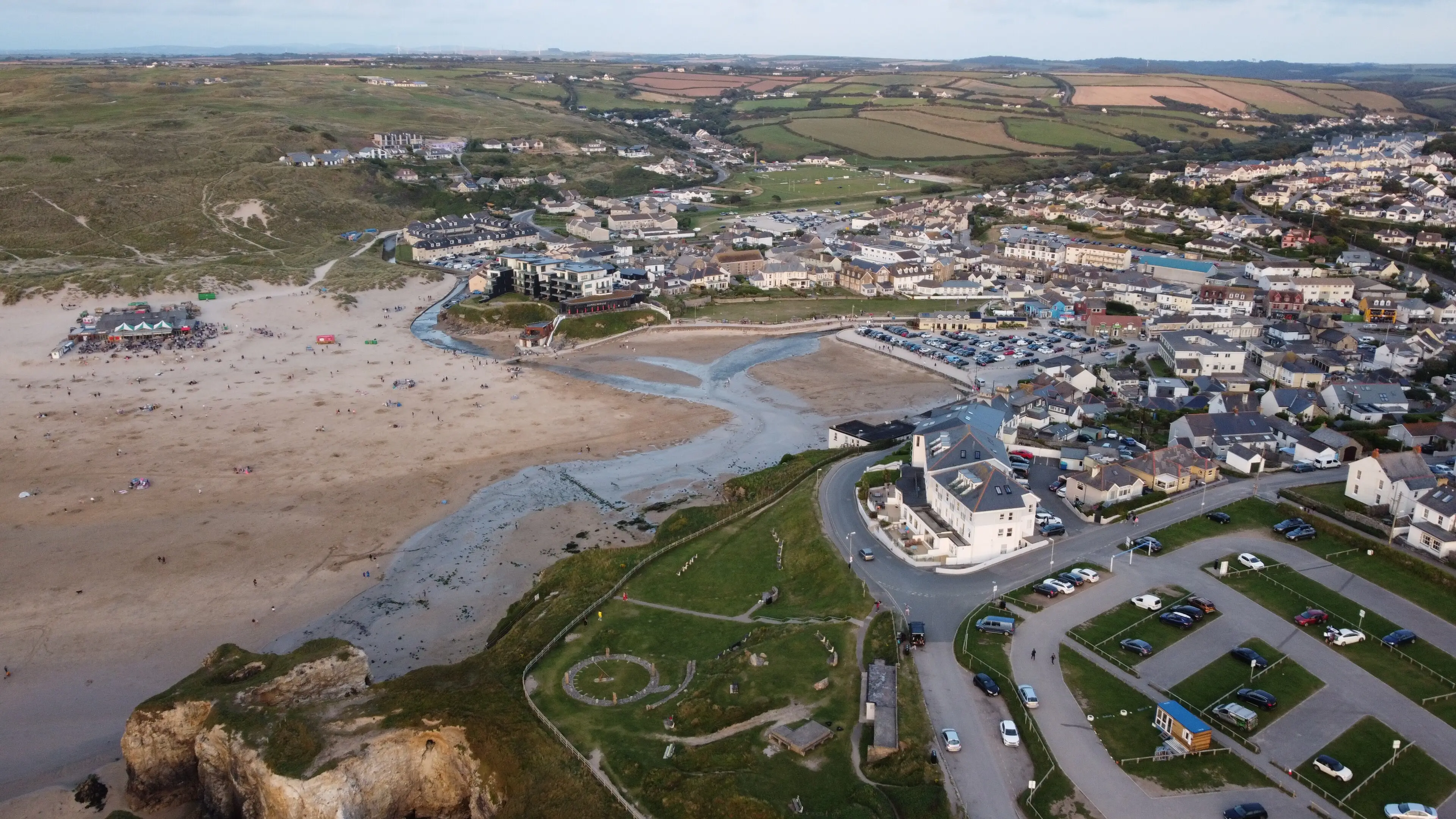
Three miles of unbroken sand, backed by dunes and facing due west into the Atlantic. Perranporth is one of the longest beaches in Cornwall and one of the best for beginners because there's so much space that you never feel crowded, even in peak summer. The waves are consistent — the beach picks up every swell and the sand creates gentle, forgiving breaks along its entire length. Perranporth Surf School operates from the main beach, and there's also good surf at the quieter southern end near Droskyn Point. The town behind the beach is low-key — a few pubs, a chip shop, a surf shop — which suits a surf trip better than the busier resort towns. The Watering Hole, built into the dunes at the north end of the beach, claims to be the only bar on a beach in the UK and is the perfect place to sit with a post-surf pint and watch the evening glass-off.

The details

Mid-north Cornwall · West facing · 3 miles of sand · Never crowded · Surf school · Lifeguarded · The Watering Hole beach bar · Easy parking

Summerleaze and Crooklets, Bude

Crooklets Beach in Bude — surfers riding waves with the town visible behind, a classic north Cornwall surf scene.
Lewis Clarke / CC BY-SA 2.0

Bude's two town beaches sit either side of the breakwater and offer different characters on the same swell. Summerleaze, to the south, is more sheltered and has a natural sea pool at low tide — perfect for nervous swimmers who want to get comfortable in the ocean before trying waves. Crooklets, to the north, is more exposed and has better-shaped waves for surfing, though it can be rockier at low tide. Together they give beginners options: if one beach is too big, walk to the other. Bude Surf Experience and several other schools operate across both beaches. The town itself is friendly and unpretentious — more bucket-and-spade than boutique — with good-value accommodation and the kind of surf-town atmosphere that Newquay used to have before the stag parties arrived. The canal running through the town centre is beautiful and the coastal walks in both directions are excellent. Bude is also the closest Cornwall surf beach to the M5, which makes it the easiest to reach from most of England.

The details

North Cornwall · Two beaches either side of breakwater · Sea pool at Summerleaze · Multiple surf schools · Town amenities · Good-value accommodation · Closest to M5

Sennen Cove

Sennen Cove — the last surf beach before Land's End, with clean Atlantic waves breaking on white sand.
Chris Morgan / CC BY-SA 2.0

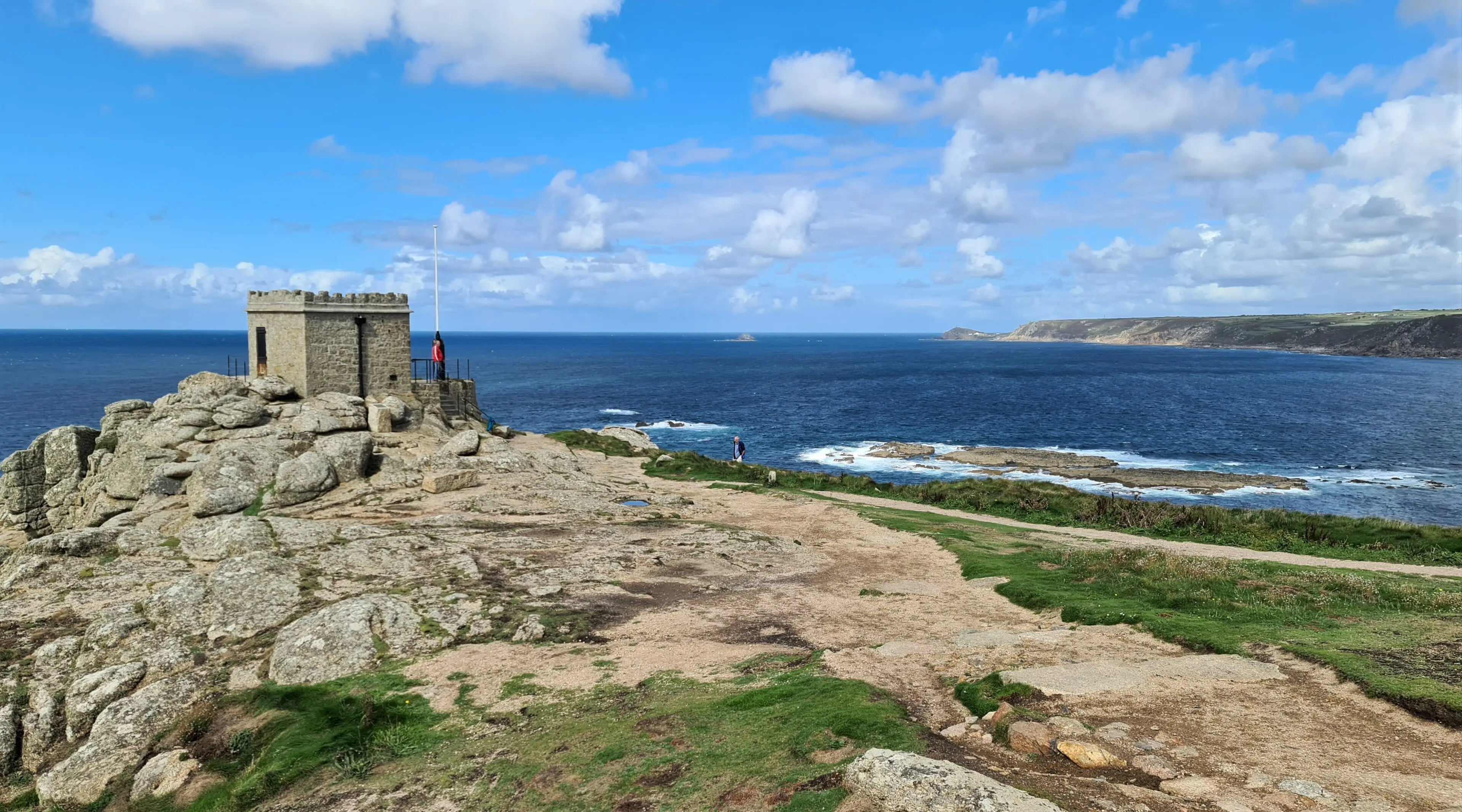
The last surf beach before Land's End, and one of the most beautiful. Sennen Cove faces west into Whitesand Bay and receives powerful Atlantic swell that's tempered by the headlands on either side, creating waves that are big enough to be exciting but clean enough to learn on. The beach is white sand — unusual for Cornwall, where most beaches are golden — and the water is a deep, clear blue that photographs absurdly well. Smart Surf School and Sennen Surfing Centre both run lessons, and the standard is high. The Round House gallery and cafe at the harbour end of the beach is a good place to recover after a session. Sennen is remote — forty minutes from Newquay, twenty from Penzance — which keeps the crowds manageable even in summer. It's also a working fishing harbour, which gives it a character that purpose-built surf beaches lack. The lifeboat station at the harbour wall is one of the most photographed in Cornwall. Come for the surf, stay for the light.

The details

West Cornwall · West facing · White sand · Powerful but clean swell · Two surf schools · RNLI station · Remote location keeps crowds down · Stunning scenery

Stay close to the surf

Stay within walking distance of the waves

The best surf trips start with accommodation close enough to the beach that you can check the waves from the window. A clifftop cottage above Fistral or a Bude townhouse with a sea view means early-morning sessions without the car park queue.

Browse surf-friendly cottages

AllCornwall may earn a commission on this link — it never affects the price you pay.