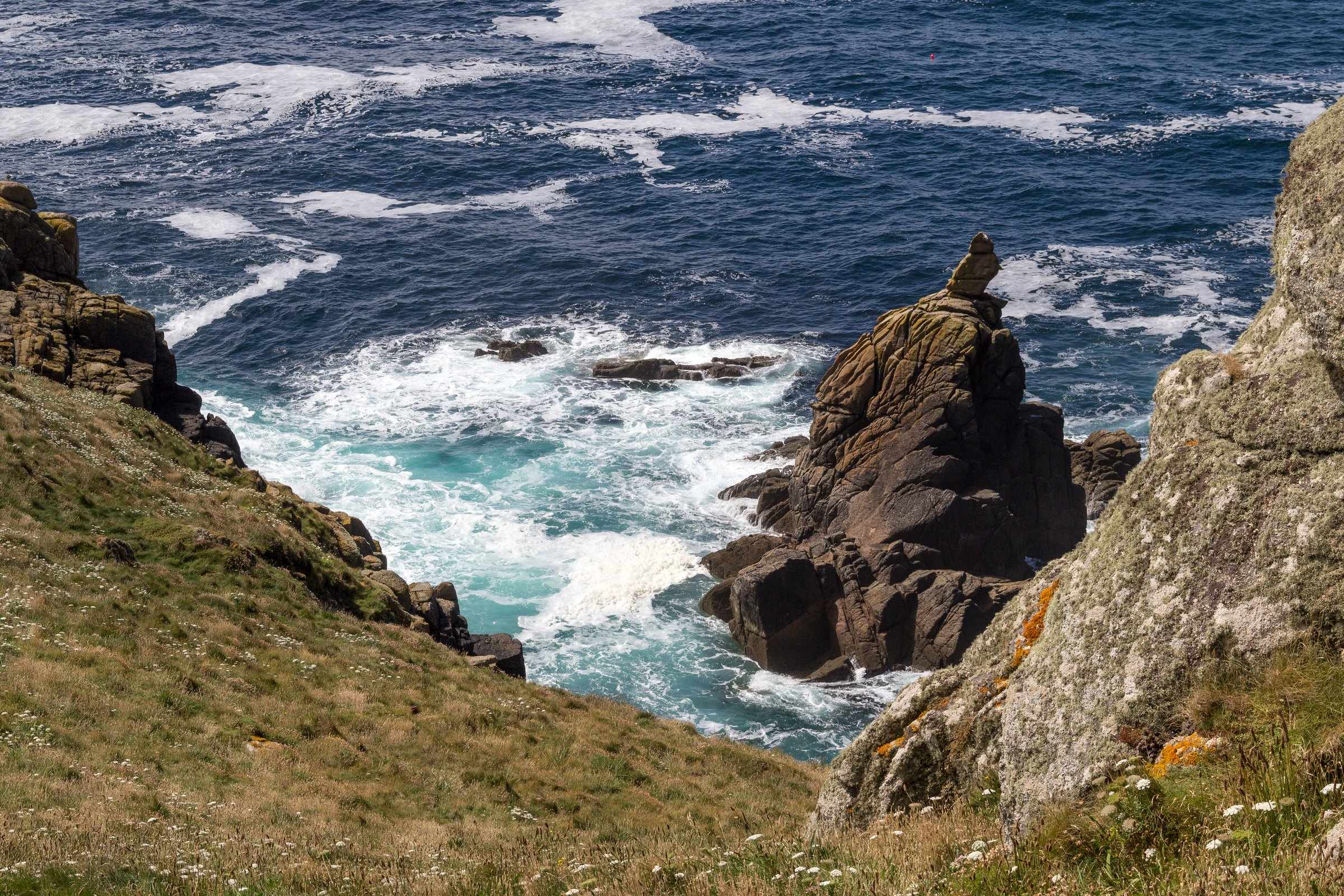
The South West Coast Path near Land's End — open clifftop path above the Atlantic.

Cornwall · Walks · St Austell

Walks near St Austell.

St Austell is surrounded by a landscape defined by china clay extraction — white pyramidal tips and turquoise-blue flooded pits that have created an unlikely and dramatic walking terrain.

Photograph — Dietmar Rabich / Wikimedia Commons (CC BY-SA 4.0)

St Austell · Mid Cornwall

St Austell is the working capital of Cornwall's china clay industry, and the landscape around it is unlike anything else in the county. The white tips — pyramidal waste heaps from clay extraction — rise above the town to the north and west; the clay pits below them are turquoise-blue lakes that photographers travel specifically to capture. The area is often called the Cornish Alps, and while the geology is entirely man-made, the walking through it is genuinely distinctive. The Eden Project — planted in a former clay pit — is the most dramatic example of this landscape repurposed, but the wider clay country has its own raw walking appeal that most visitors driving the A30 never discover.

Away from the clay landscape, St Austell sits within easy reach of the Pentewan Valley trail south towards the coast and the Luxulyan Valley east — a wooded gorge carrying a remarkable Victorian viaduct through a landscape of ancient oak and cascading water. The town itself is not a walking destination in the conventional sense, but as a base for accessing this varied hinterland, its central position and mainline rail connection make it unusually practical for walkers without cars.

Eden Project Pit Walk

The Eden Project occupies a former china clay pit at Bodelva, two miles north of St Austell. The walk around the pit rim above the biomes is included with Eden admission — a one-mile circuit above the domed structures with the clay pit geology visible in the exposed rock faces. Outside Eden, the footpath above the Bodelva pit on public rights of way delivers the same views without the entry fee. The scale of clay extraction visible here is sobering and impressive in equal measure.

Best for

Industrial landscape walking and biome architecture views

Luxulyan Valley

Four miles north-east of St Austell, the Luxulyan Valley is one of the finest hidden landscapes in Cornwall. A wooded gorge through which the Ponts Mill mineral tramway once ran, the valley is threaded with footpaths beside the cascading Luxulyan River. The Treffry Viaduct — ten arches of granite, 92 feet high, built in 1839 — spans the valley and carries the old mineral line. The circular from Luxulyan village through the valley is four miles of consistently beautiful walking on well-maintained paths.

Best for

Victorian industrial viaduct and ancient oak gorge woodland

Pentewan Valley Trail

The Pentewan Valley Trail runs four miles south from St Austell along a former mineral railway to Pentewan beach on the coast. The trail is level, tarmac-surfaced, and suitable for cyclists and pushchairs as well as walkers. The route passes through the valley floor to Pentewan Sands and a broad, sandy bay. An excellent accessible route; the only gradient is the return uphill from Pentewan to St Austell.

Best for

Accessible flat trail to a sandy south coast beach

Helman Tor and Breney Common

Six miles north of St Austell, Helman Tor is a granite outcrop rising above Breney Common — a stretch of wet heath and bog managed by the Cornwall Wildlife Trust as one of the best lowland wetland habitats in the county. The path from the car park near Reperry Cross to the tor and across the common is three miles of open moorland walking with views south to the Clay Country and north towards Bodmin Moor. Excellent dragonfly watching in summer on the bog pools.

Best for

Granite moorland tor and lowland wetland wildlife

Charlestown Harbour and the Clay Coastal Path

A mile south of St Austell, Charlestown is a preserved Georgian harbour built in 1801 to export china clay — the square-rigged tall ships moored there are regularly used in film and television productions. The Coast Path east from Charlestown climbs to the clifftops above the old clay loading facilities and continues to Par Sands: a broad, flat beach of china clay-white sand. Three miles there-and-back; the harbour itself is worth a full hour of independent exploration.

Best for

Georgian harbour heritage and clay export coastal history

Stay nearby

Holiday cottages near St Austell

Self-catering cottages and holiday homes within easy reach of St Austell's best walks. Book direct for the best availability.

Browse on Sykes

AllCornwall may earn a commission on this link — it never affects the price you pay.